


Thanks for opening Altered Craft’s weekly AI review for developers, and for making it part of your Monday. This week’s picks keep putting a price on something that used to feel free. Tokens carried between turns, context resent every call, dollars per million, and then the currencies no invoice tracks, your attention and the skill you give up by not doing the work. The last piece asks whether the reasoning you’re buying is reasoning at all.
AC’s AI usage policy
TUTORIALS & CASE STUDIES
The tutorials put a number on things that used to feel free. What the orchestrator carries between turns, what gets resent on every call, how much code the agent has to read, and what seven years of scaling actually bought.
The Orchestrator Tax: The Hidden Cost of Multi-Agent Coding
Estimated read time: 7 min
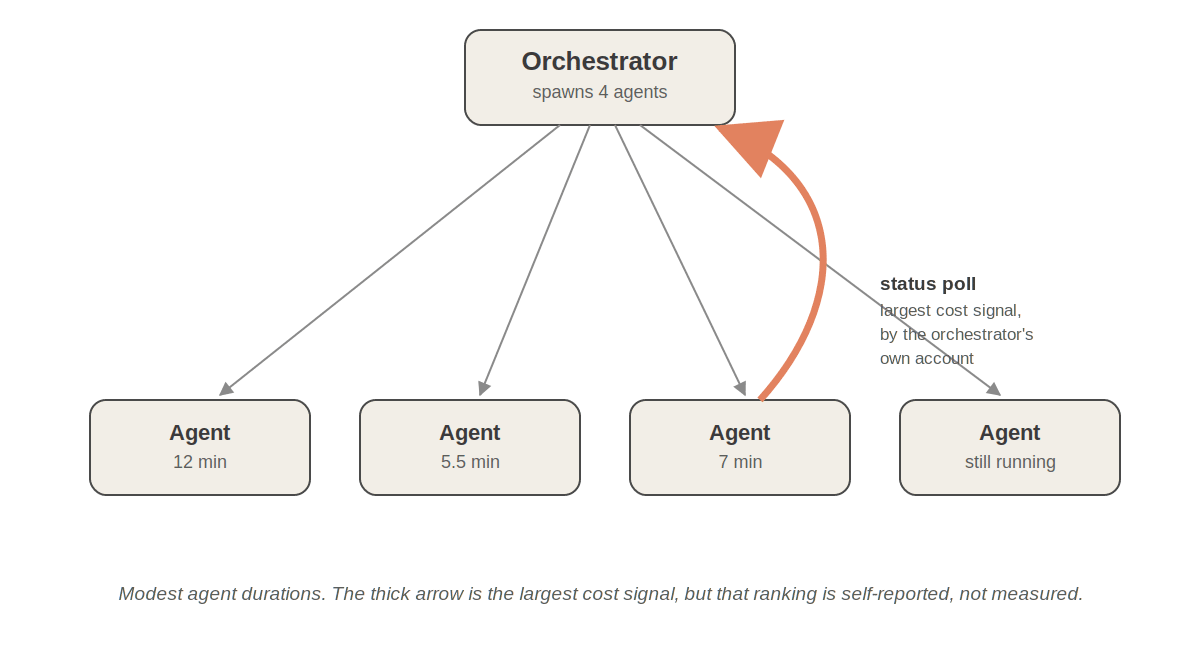
Extending our coverage of Claude’s new context-engineering rules[1] from last week, this piece takes that discipline up a level. This article by Rahul Garg on Martin Fowler’s blog shows debugging a slow four-subagent session reveals the cost isn’t parallelism but the orchestrator’s polluted working memory. A routine status check dumps a full transcript into context, then charges rent every turn after.
Why this matters: Treat the orchestrator’s context as your scarcest resource, keep disposable reasoning inside subagents, and codify a rule only when one missing fact would have prevented the mistake.
[1] The New Rules of Context Engineering for Claude’s Latest Models
Why Prompt Caching Makes or Breaks Your Coding Agent’s Bill
Estimated read time: 9 min
That same context shows up on the invoice. Coding agents resend nearly the same prefix every turn, so cache behavior shapes cost, latency, and tool design. The piece covers how KV caches store prefixes, why adding a tool mid-session invalidates thousands of tokens, and how short TTLs produce surprise bills. As an aside, I really like the style of this blog, minimalism at its best.
The takeaway: Cache stability is a design constraint, not an optimization. Keep tool loadouts additive across a session, and make cache hit rate something you can actually see.
Does Refactoring Pay Off in an Agent-Built Codebase? An Experiment
Estimated read time: 9 min
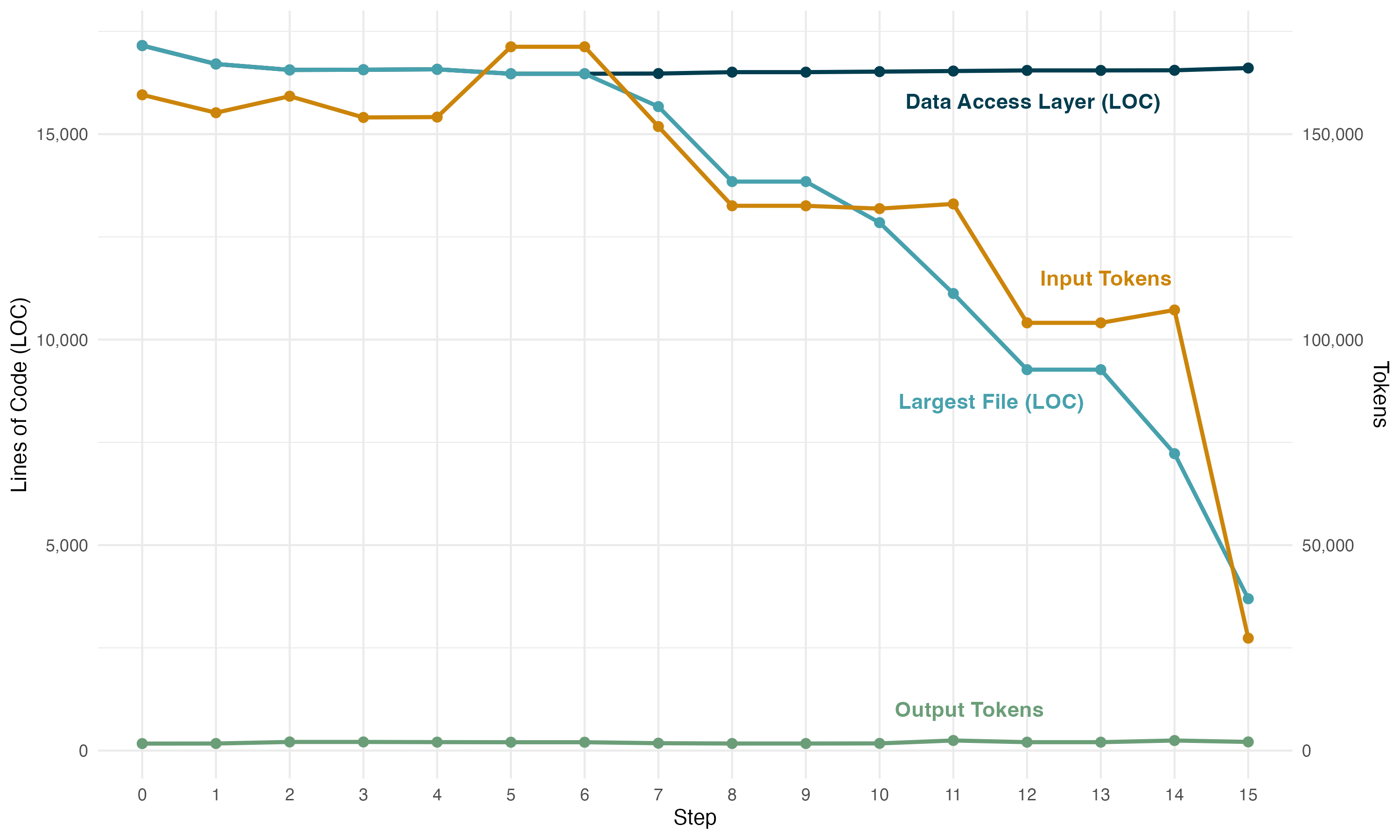
Another great post on Martin Fowler’s blog. This time from Giles Edwards-Alexander. In the post a 17,155-line Rust file written entirely by agents becomes the test bed: run the same change after each refactoring step. Refactoring cut input tokens by 83%, because the agent reads less code, not because there is less code.
The opportunity: Refactoring an agent-built codebase into well-bounded files is a recurring cost saver rather than a one-time cleanup, since every future change reads a smaller, more relevant slice of the repo.
From GPT-2 to Kimi K3: What Actually Changed in Seven Years
Estimated read time: 13 min
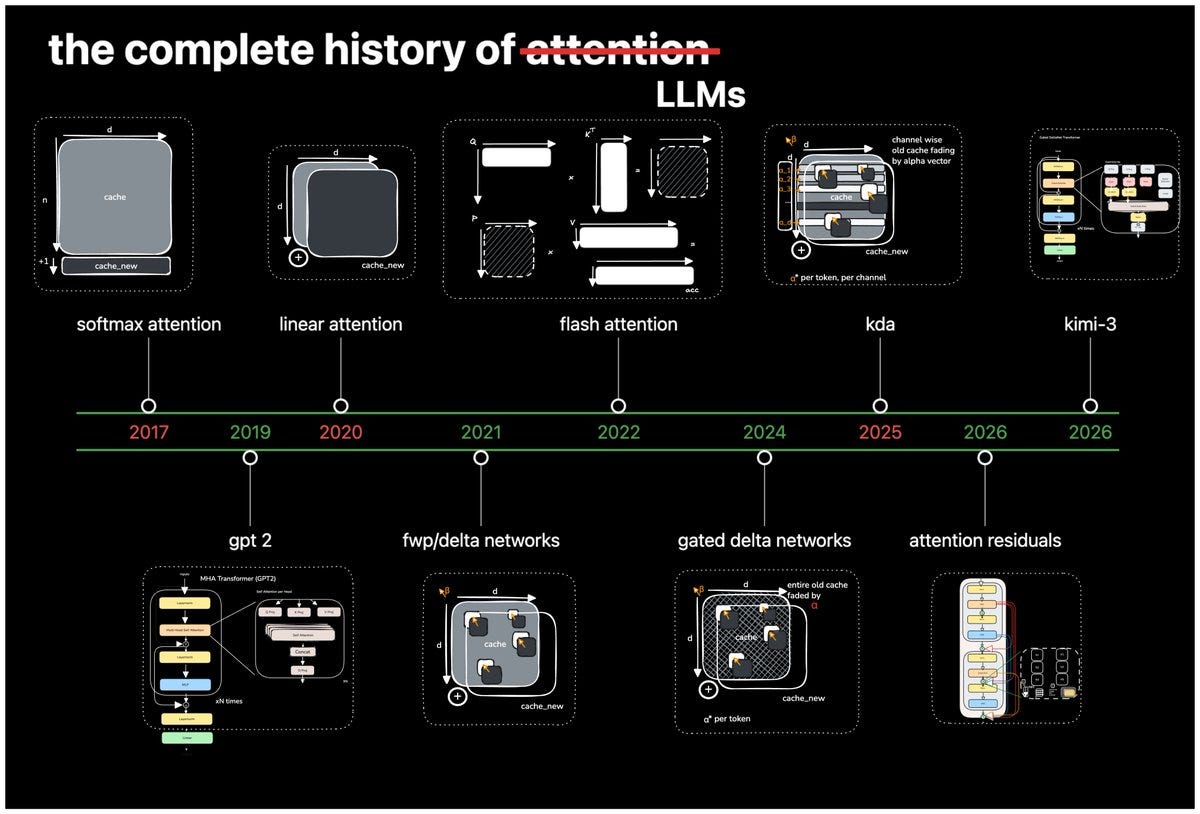
Zoom out to the models themselves and the story rhymes. A worklog traces GPT-2’s 124M parameters to Kimi K3’s 2.8 trillion, roughly 22,580 GPT-2s, and argues much of the progress is efficiency work, not reinvention, walking through KV caching, linear attention, and DeltaNet in code.
What’s interesting: Reading the attention code is the fastest way to see that scale mostly bought efficiency reworks, not fundamentally new mechanisms, which reframes what “frontier” actually means.
TOOLS
The tools pick up where the tutorials leave off. Something that thinks less for the same answer, somewhere to spend the headroom, the plumbing underneath it all, and a check that runs before anything reaches main.
ParallelCode: Run Ten Agents, Ten Branches, Zero Waiting
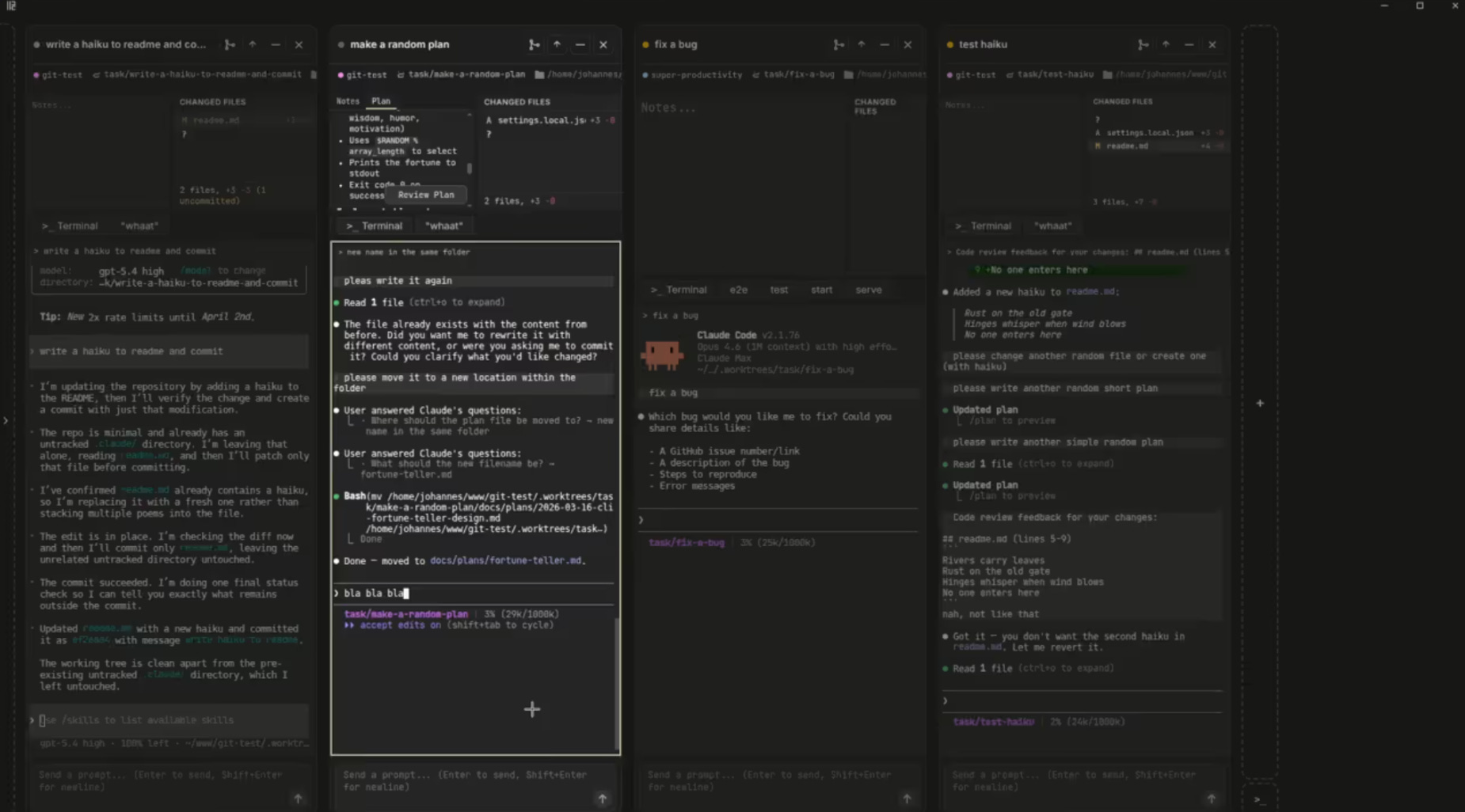
✨This week’s builder spotlight is for Johannes Millan who’s built and maintains ParallelCode
In Johannes’s own words: ParallelCode is a free, open-source desktop app for developers running several CLI coding agents at once. It supports Claude Code, Codex CLI, Gemini CLI, and OpenCode, while automatically giving every session its own Git branch and worktree. Agents can explore alternative solutions or tackle separate tasks without overwriting one another’s work. Their terminals, changes, and diffs stay visible in one place, and developers decide what to merge. Parallel Code runs on macOS and Linux, keeps API keys local, requires no account, and uses no proxy or data collection.
Two-minute introduction:
If you’d like to be in a future edition spotlight, send the details to sam@alteredcraft.com
Half the Reasoning, Same Answers: A Fine-Tune to Stop Overthinking
Estimated read time: 7 min
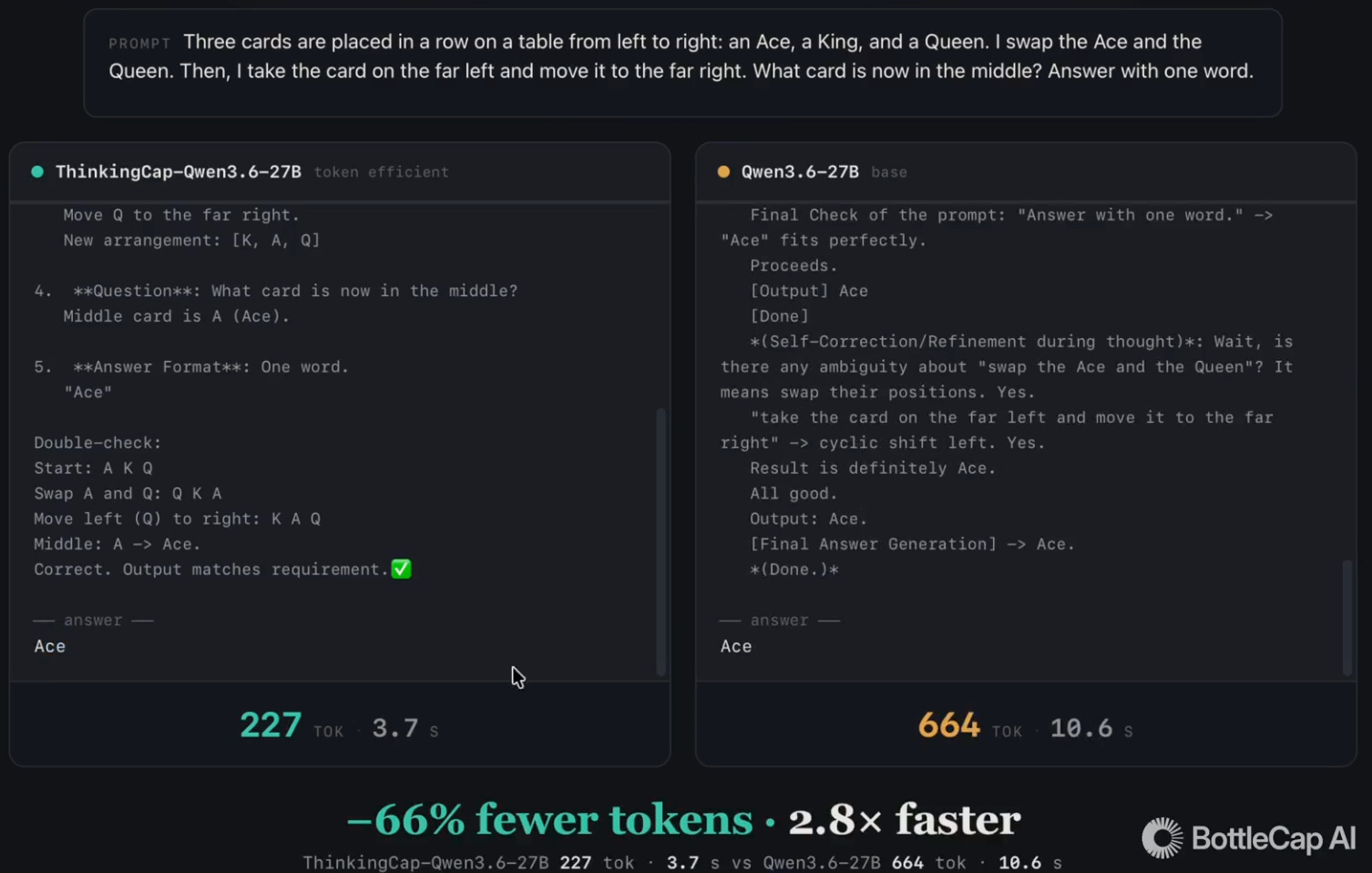
Efficiency work shows up in the weights too. BottleCap’s fine-tune of Qwen3.6-27B targets models that think longer than they need to. Rewarding brevity over raw correctness delivers 46% fewer reasoning tokens with unchanged accuracy across twelve benchmarks, shipping on HuggingFace under Apache 2.0.
What this enables: If a local Qwen burns tokens narrating instead of solving, a drop-in efficient checkpoint halves reasoning cost and latency, and an Apache 2.0 license makes it cheap to test.
MCP Goes Stateless: The Enterprise-Scale Rewrite
Estimated read time: 3 min
Underneath all of this, the plumbing is being redrawn. The Model Context Protocol, born as a local-machine bridge, gets an overhaul that rethinks MCP for enterprise scale, adding a stateless design and a 12-month deprecation window under the Linux Foundation, with OpenAI, Google, Microsoft, and Amazon contributing.
Why now: If you’re building on MCP, design for stateless deployment from here on, and lean on the new 12-month deprecation guarantee when you plan integration lifecycles.
Rig: Building LLM Apps in Rust, Not Just Python
Estimated read time: 4 min
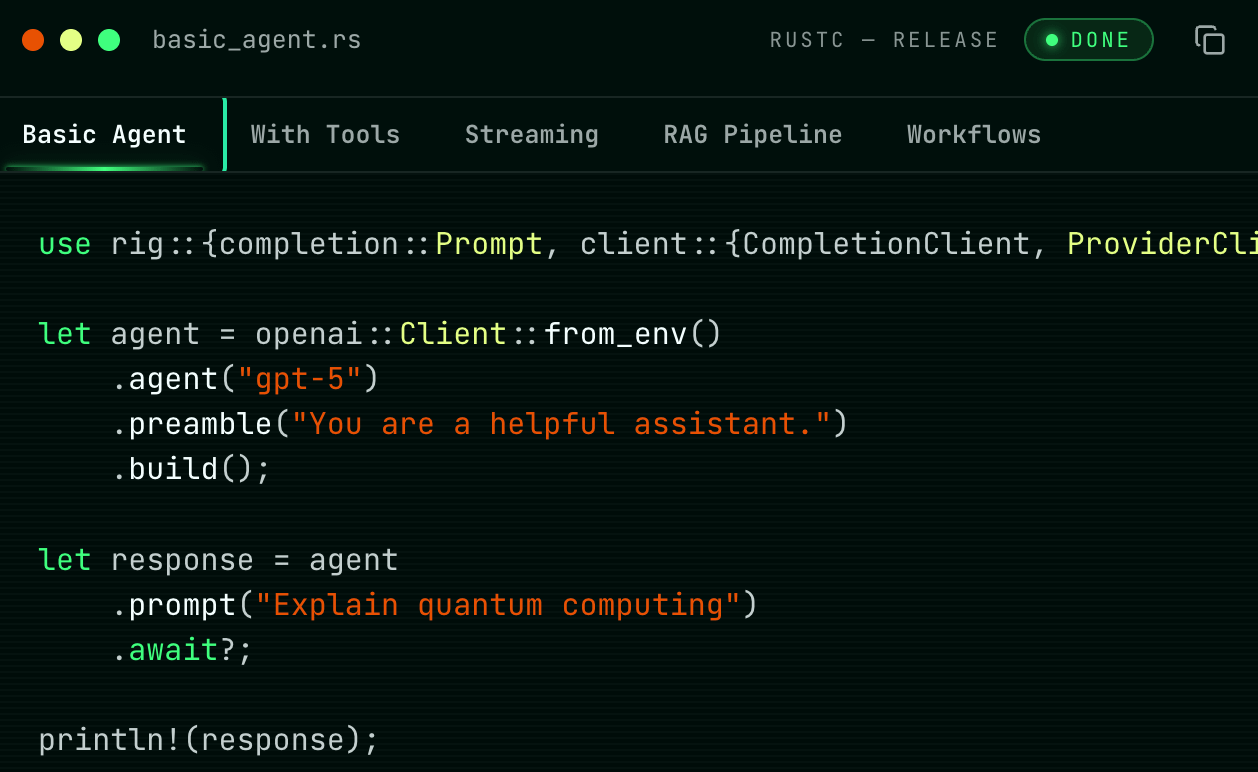
The library layer above it keeps widening. Rig is a Rust crate for LLM-powered applications, offering 20+ model providers under one unified interface plus 10+ vector stores. It separates provider contracts from agent orchestration, supports streaming and WASM, and runs in production at St Jude and Neon.
The context: Agent tooling has been Python and TypeScript by default. Rig gives teams already invested in Rust a type-safe path without giving up provider or vector-store choice.
Codex Security CLI: Scan, Confirm, and Fix Vulnerabilities from the Command Line
Estimated read time: 7 min
No shortage of security concerns in the new these days. Whatever you build on top, something has to check the output. Codex Security’s new open-source CLI scans repositories, tracks findings over time, and gates commits. It covers diff scans, pre-commit hooks, bulk GitHub scans, and CI policies, shipping report-only scans with SARIF exports by default.
Key point: Wiring this into a pre-commit hook or CI job catches high-severity findings before they reach main, and report-only defaults let you tune the noise first.
NEWS & EDITORIALS
The editorials price the same question in other currencies. Dollars per token, hours of attention, skill you trade away by not doing the work, and whether the reasoning you’re paying for is reasoning at all.
GPT-5.6 Cuts Prices and Adds Fast Mode to the API
Estimated read time: 4 min
Bold move by OpenAI I know will prove very popular with solo dev and enterprise alike. Building on our coverage of Fireworks.ai’s routing benchmark[2] from last week, OpenAI drops GPT-5.6 Luna pricing 80% and Terra 20%, and adds a Fast mode running Sol up to 2.5x faster. The framing centers on matching intelligence to the outcome, cheap models for well-specified steps, premium compute for consequential work.
The opportunity: Split agentic workflows by step. Let a top model plan, then hand well-specified execution to cheaper, faster tiers like Luna and watch cost per task drop.
[2] Stop Picking a Model, Route Between Them
The Case for Buying Time on Frontier AI
Estimated read time: 2 min
Not every cost has a price tag, though. Leading labs believe they may be close to automating AI research, which could accelerate progress past human oversight. This short piece argues the world lacks the tools to deliberately pace frontier-wide progress, since competition discourages any single lab from slowing alone.
Worth noting: The argument is for coordination rather than unilateral slowdowns, which is a more tractable ask and a useful frame if you follow AI policy at all.
The Developer as Conductor: When Attention Becomes the Bottleneck
Estimated read time: 7 min
One final piece from Martin Fowler’s blog this week. This one in from Rachel Laycock the CTO at Thoughtworks. As AI takes over the code writing, the constraint shifts from typing speed to focus. The piece argues human attention is now the bottleneck, with strong developers orchestrating eight or more agents in parallel, closer to conductors than soloists.
Why this matters: Attention and energy are engineering resources worth budgeting like any other. Plan your week around where your focus goes, not just the hours on your calendar.
Andrew Ng’s LearnVector Bets on One-to-One AI Learning
Estimated read time: 5 min
Spending that attention badly has a downstream cost. Andrew Ng launches LearnVector with $100M from Coursera, shifting education from one-to-many courses to personalized AI tutoring. The pitch hinges on a caveat: chatbots without guardrails harm learning, because cognitive offloading leaves people less skilled. Products arrive early 2027.
The takeaway: Reaching straight for a chatbot answer offloads the cognitive work that builds skill, so use AI as a guide that keeps you working rather than a shortcut past it.
Is AI Reasoning Right for the Wrong Reasons?
Estimated read time: 10 min

Which leaves the question underneath the whole edition. Reasoning models win math medals, yet studies suggest their chains of thought are neither faithful nor causal to the answers, pointing instead to approximate retrieval over genuine reasoning, helped along by verifiable domains like code and proofs.
Key point: Read a model’s visible chain of thought as a performance aid, not an auditable record of how it reached the answer, and verify the output rather than the narration.