


Welcome back to Altered Craft’s weekly AI review for developers, and thank you for keeping this a Monday ritual. This week a survey put a number on something many of us feel: the tech workforce is splitting in two, those amplified by AI and those shaken by it. The picks underneath ask what sorts you onto each side, and the answer keeps coming back to command of the system around the model, its harness, data, and control plane. The tools are the dividing line, the editorials the human cost. Let’s dig in.
TUTORIALS & CASE STUDIES
The tutorials are where the toolkit comes together. Command of the system around the model is something you build, not something you’re born with, and this is where you build it: survey the open stack, tune the harness instead of the model, then watch that harness become the path to agents that improve themselves.
Mapping the Gaps in the Open Source AI Stack
Estimated read time: 3 min
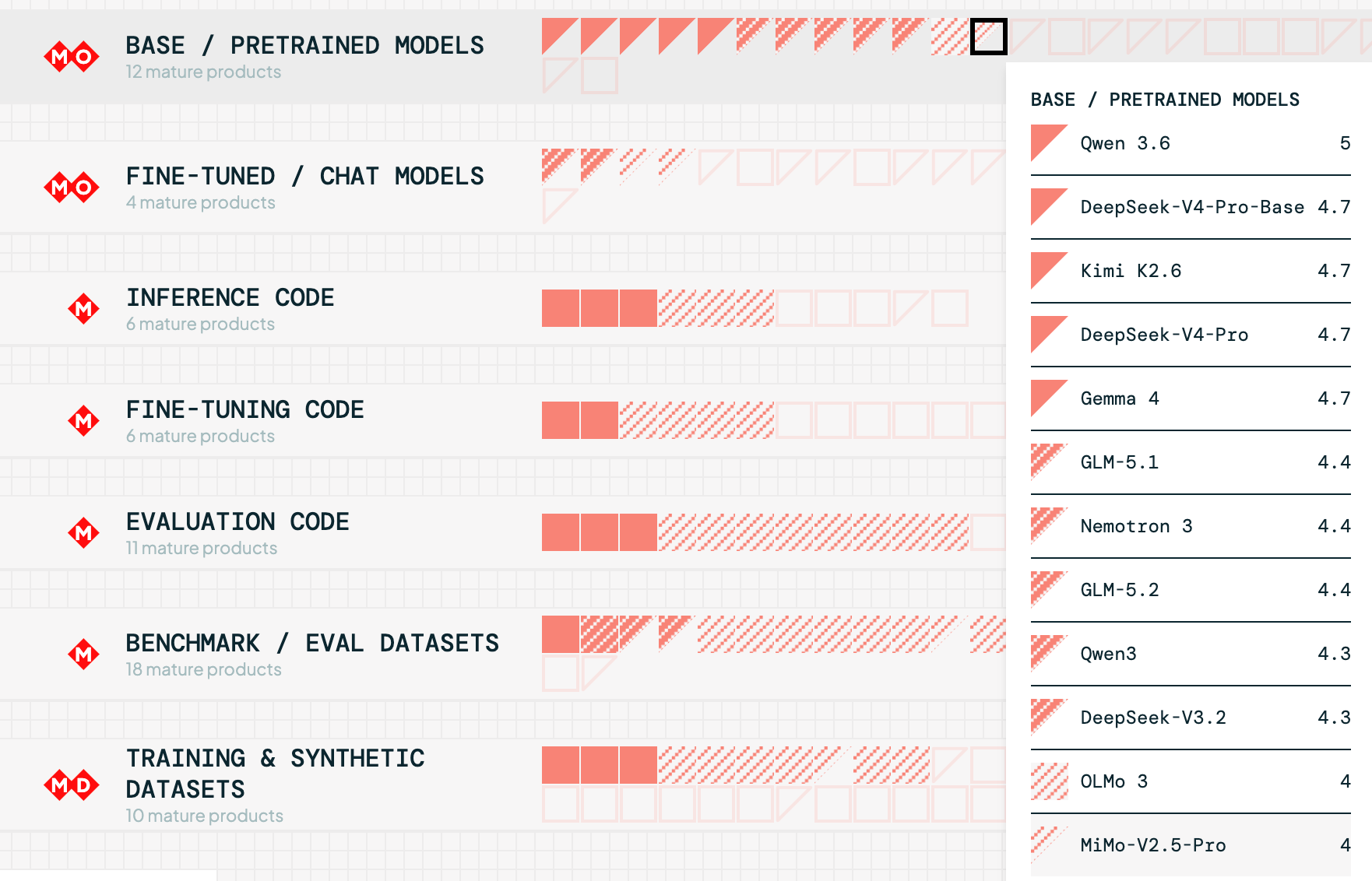
Start with the lay of the land. A community project pursues a public option for AI that serves people over profit. It evaluates over 24,000 projects, from foundation models to inference backends, scoring each on openness, capability, and adoption to reveal the open stack’s gaps.
Why this matters: Before betting on an open source AI component, check where it lands on openness, capability, and adoption. The gaps are more visible than they look.
Tuning the Harness, Not the Model
Estimated read time: 9 min
Building on our coverage of the outer loop as the product[1] from last week, this LangChain playbook shows how tuning the scaffolding instead of the weights lifted an open Nemotron 3 Ultra to near-Opus quality at roughly 10x lower cost, using eval-driven loops, targeted prompt blocks, and context injected where the model fails.
The takeaway: Before reaching for a bigger model, treat the system prompt, tool descriptions, and middleware as tunable training data, and use evals to prove each change survives.
[1] Autoresearch: When the Loop Becomes the Product
Harnesses, Not Weights: The Near-Term Path to Recursive Self-Improvement
Estimated read time: 11 min

Taking that further, recursive self-improvement likely arrives through harness engineering as an optimization target, not a model rewriting its weights. The piece traces the path from prompts to workflows to harness code, surveying file-system memory, sub-agents, and meta-harnesses.
The principle: Treat the system around your model, its workflow, memory, and tooling, as a first-class optimization target rather than an afterthought to raw model intelligence.
Mapping the Rise of Self-Evolving Agents
Estimated read time: 2 min
At the frontier of the same idea, a short thread sketches a taxonomy for self-evolving agents that improve themselves over time, pointing to Hermes Agent for automatic reusable skills and RSI Lab for recursively discovering algorithms. It frames an emerging category as agents move beyond static behavior.
Why now: Start tracking how agents accumulate reusable skills and self-improve, because static prompt-and-tool setups are giving way to systems that evolve their own capabilities.
The Real Factors Behind Running Local Models for Coding
Estimated read time: 9 min
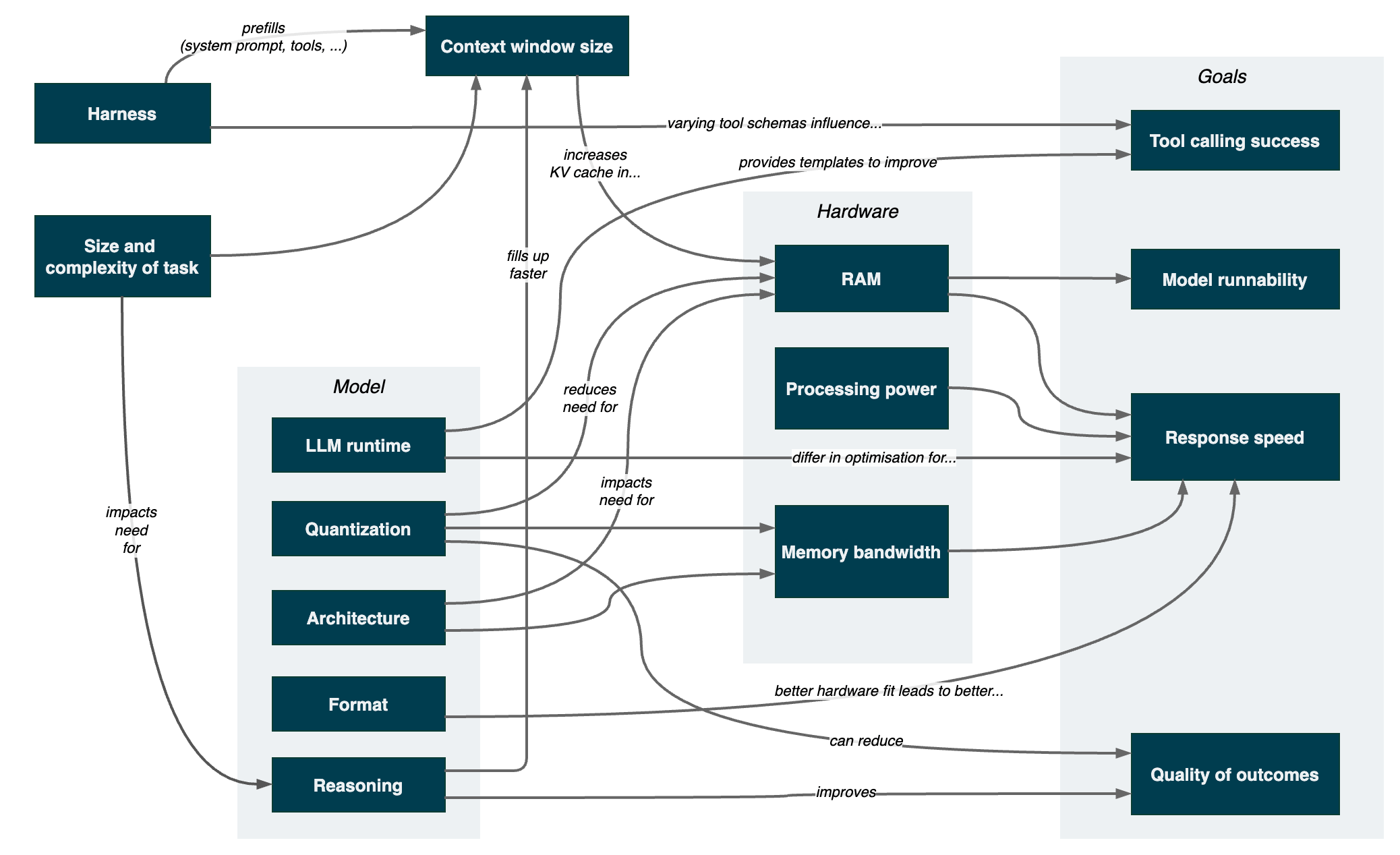
End on a lever you control, your own hardware. Local coding models have improved sharply, but viability hinges on interacting variables. The piece maps how RAM, quantization, context size, MoE architecture, and harness overhead shape results, concluding it’s still not plug-and-play. Qwen3.6 35B MoE offers the best balance.
Key point: If you want to run models locally for agentic coding today, budget for at least a 32K to 64K context window and expect to trade capability against your RAM ceiling.
TOOLS
The tools are where that command becomes concrete. First the infrastructure that wraps your models, a control plane and the data that earns agent trust, then the models themselves, a punchy open MoE and a compact navigator, and finally a frontier launch whose real story is the plumbing, not the benchmark.
Otari: An Open-Source Control Plane for Your LLM Stack
Estimated read time: 3 min
The tools open with the layer between app and provider. Mozilla.ai launches Otari, an open-source LLM control plane that handles routing, budgets, governance, and failover from one endpoint, so teams stop rebuilding that logic. The pitch: operating LLM infrastructure is the real challenge now, not model access.
The opportunity: Centralize routing, spend, and governance in one control plane instead of hand-rolling that logic into every LLM app you ship.
Open Data Is How Agents Earn Trust
Estimated read time: 6 min
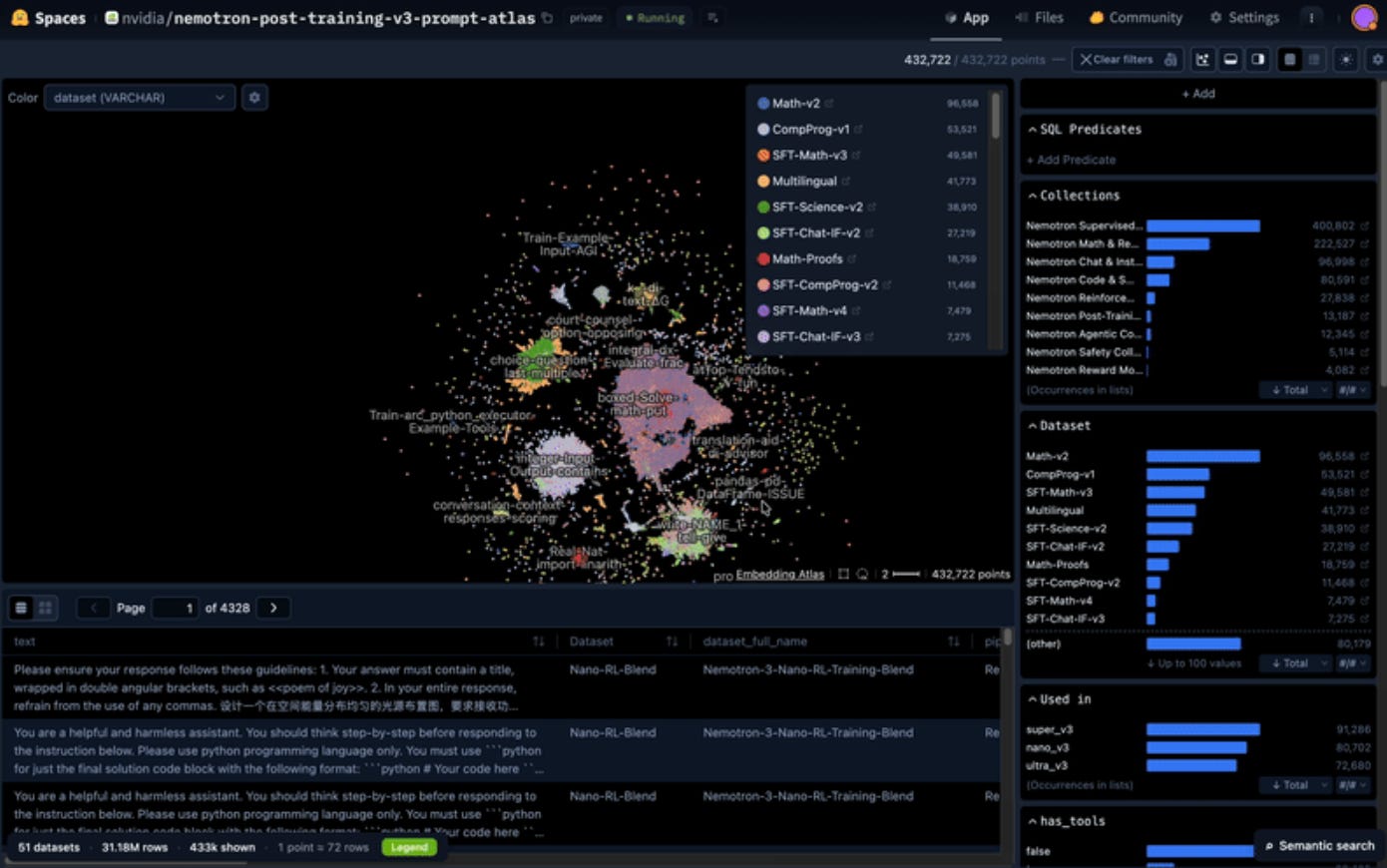
Staying at the infrastructure layer, NVIDIA’s Nemotron team argues that building capable agents is a data problem, not just a weights problem. The piece makes the case that open synthetic data builds trust between organizations, sharing useful signal without exposing secrets, and keeping agent behavior inspectable.
Worth noting: If your agent can’t recover from a broken API call, that’s a data coverage gap. Document what’s grounded, generated, and reviewed rather than treating synthetic data as filler.
Tencent’s Hy3 Lands as a Punchy Open-Weight MoE
Estimated read time: 2 min

Shifting from plumbing to the models themselves, Tencent releases Hy3, an Apache 2.0 licensed 295B-parameter Mixture-of-Experts model with 21B active parameters and a 256K context window. The link blog notes it rivals flagship open-source models with 2-5x the parameters and is free on OpenRouter until July 21st.
Try this: A permissively licensed MoE that punches above its active-parameter weight is worth a free trial on OpenRouter before the July 21st window closes.
One RGB Camera, No LiDAR: Inside Robostral Navigate
Estimated read time: 6 min
Also doing more with less, Mistral’s robotics team unveils Robostral Navigate, an 8B model that moves robots through unseen spaces from plain-language instructions using a single RGB camera. It hits 76.6% on R2R-CE via navigation as pointing plus prefix-cached training that cuts tokens 22×.
The pattern: Compact models with strong grounding priors can outperform heavier sensor stacks, so lean architecture and efficient training often matter more than adding hardware.
GPT-5.6 Lands: Luna, Terra, Sol and the SWE-Bench Standoff
Estimated read time: 4 min
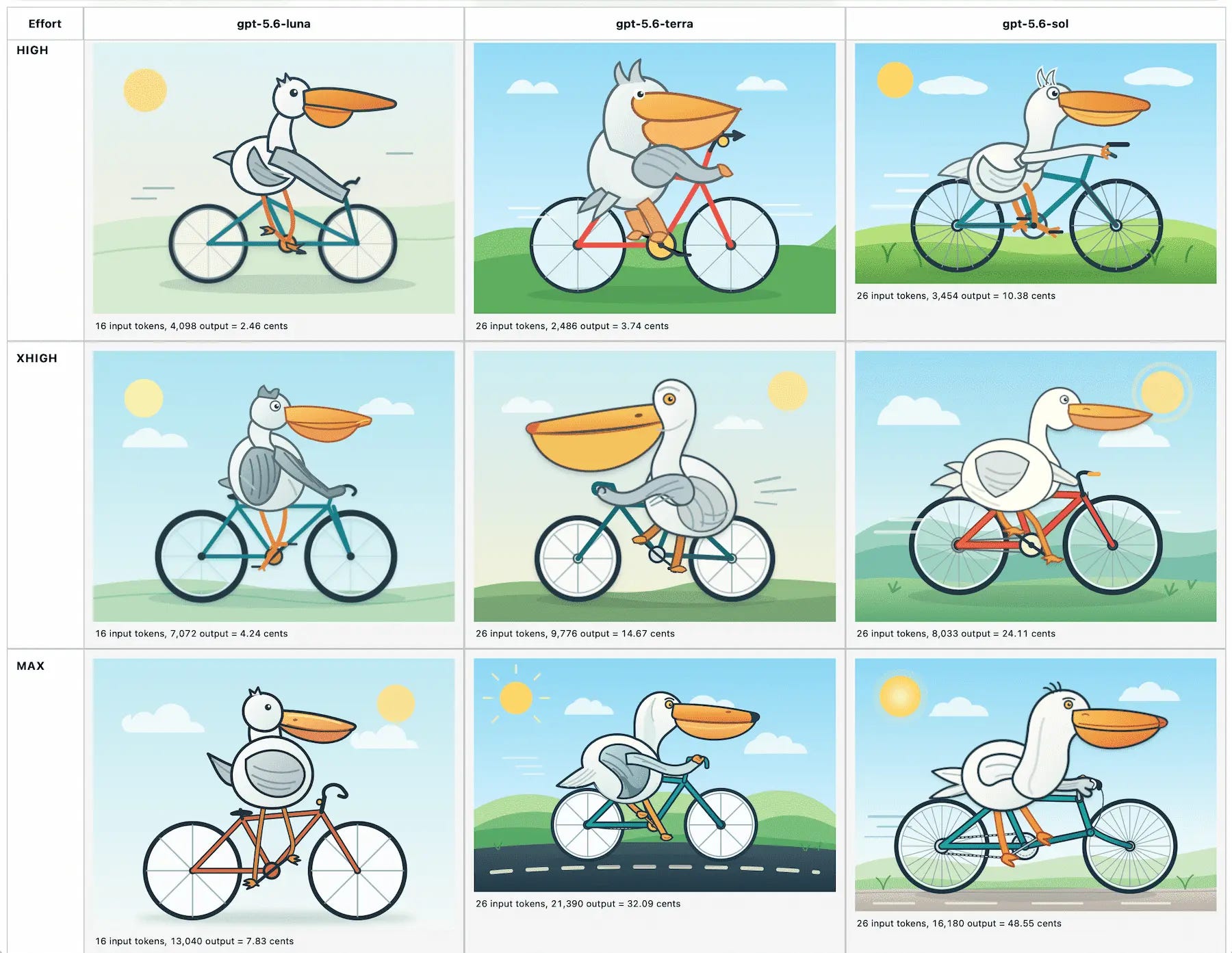
While our coverage of Claude Sonnet 5’s lower-priced agentic tier[2] last week weighed cost against capability, OpenAI now ships GPT-5.6 in three sizes, leading on agentic benchmarks while trailing Claude Fable 5 on SWE-Bench Pro. The more useful details are the new API features like programmatic tool calling and baked-in subagents.
What’s interesting: Look past the benchmark headlines. The new API primitives for tool orchestration and subagents are where GPT-5.6 actually changes how you build.
[2] Claude Sonnet 5: Opus-Class Agentic Work at a Lower Price
NEWS & EDITORIALS
The editorials turn to the human side of the divide. First the survey that names it, then the burnout it can bring, the habits it quietly erodes, the discernment worth holding onto, and finally a concrete lever you still control.
The Great AI Split: Two Tech Workforces Emerge in 2026
Estimated read time: 9 min
Start with the study that names the split. A 2026 survey finds the tech workforce bifurcating into two realities: those amplified by AI versus those shaken by it. Burnout jumped to 55.7%, and 53% wouldn’t recommend their role. The top fear isn’t replacement but doing more for the same pay.
The stakes: How AI has reshaped your professional identity now predicts your career outlook more than title or tenure. Regardless of where you lie on this spectrum, empathy for your fellow colleagues should be held in high regard.
The Slow Burn of Reading LLM Output All Day
Estimated read time: 4 min
One side of that split is quiet burnout. A developer reflects on hours spent daily reading AI output, and the fatigue that follows. The issue isn’t unreliability but repetition of the same style and same mistakes. Hallucinations, staccato fragments, and excessive emoji feel minor alone, yet compound.
The shift: As LLMs move from occasional tool to constant companion, the stylistic sameness of their output becomes its own fatigue worth naming.
Your AI Copies Your Bad Habits, Too
Estimated read time: 3 min
And the pressure to ship more runs both ways. Letting an LLM write duplicated logic feels harmless until you realize it learns from what you merge. The piece argues that every shortcut becomes a signal, so sloppy patterns compound and quietly train the AI to repeat your worst habits.
The practice: Write code like a human will maintain it, because the LLM reads your codebase and echoes back whatever patterns you let slide.
Five Years Later, “Stochastic Parrots” Still Gets Misread
Estimated read time: 9 min
Staying critical is its own kind of leverage. On the paper’s fifth anniversary, lead author Emily Bender corrects misreadings of the “stochastic parrots” metaphor. It describes large language models specifically, not all AI, and her central point: when model output makes sense, we are the ones making sense of it.
The context: When evaluating LLM output, account for your own tendency to project meaning onto text the system produced without any comprehension.
That’s the week.
Regarding AI's arrival in software development, it helps to zoom out: every major technology has arrived with its loud believers and its wary holdouts, and the history of the craft was written by both. The overclaimers are nothing new, and neither is the engineer who would rather go deep on fundamentals than sprint after what’s new in the space. Wherever this week finds you on that spectrum is completely okay; there is no wrong side to be a thoughtful person on. So keep your head up, treat the hype as noise, look for the real signals underneath it, and give yourself room to experiment. That is how each of us finds our own footing. See you next Monday.
– Sam