


Welcome back to Altered Craft’s weekly AI review for developers, and thank you for reading along each week. This edition keeps pointing in one direction, upstream. Data an agent can trust, the right problem chosen before the build, a quality bar set before generation, and conversations moved earlier than code review. On the tools side, the new releases hand you an effort dial. The interesting work now sits before the first line of code.
TUTORIALS & CASE STUDIES
This week’s tutorials all point upstream, to the requirement, the data, the memory, and the standard you set before an agent writes anything.
Solving the Right Problem When Agents Do the Building
Estimated read time: 14 min
With agents multiplying implementation capacity, a single bad requirement can propagate into hundreds of wrong changes. A six-document framework moves the work upstream, reducing uncertainty while change is still cheap, from business problem through governance and planning.
Where to start: Spend your preparation effort where a wrong decision is expensive to reverse, and leave the rest deliberately flexible, because agents will build whatever you specify at full speed.
Why Your Data Isn’t Ready for AI Agents (Even If You Think It Is)
Estimated read time: 9 min
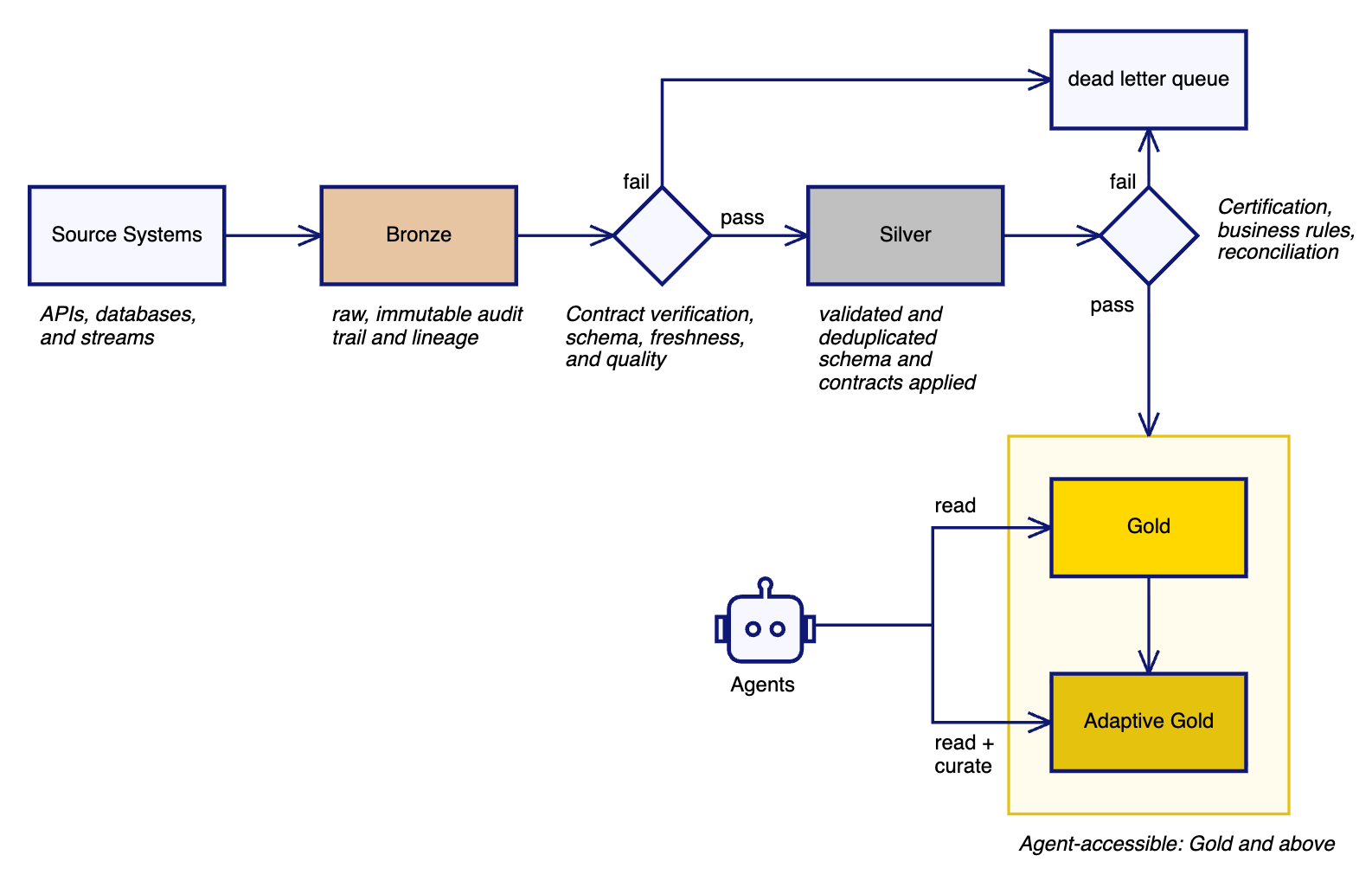
Upstream of the requirement sits the data. Data built for human analysts breaks when agents consume it, because a human hesitates at data that looks wrong; an agent acts on it anyway. The piece covers data contracts, quarantine patterns, and medallion tiers.
Why this matters: Move the context and sanity checks humans supply for free into the data itself, because agents fail confidently on data they can’t smell is wrong.
Memoryfields: Agent Memory as a File Format, Not a Pipeline
Estimated read time: 11 min
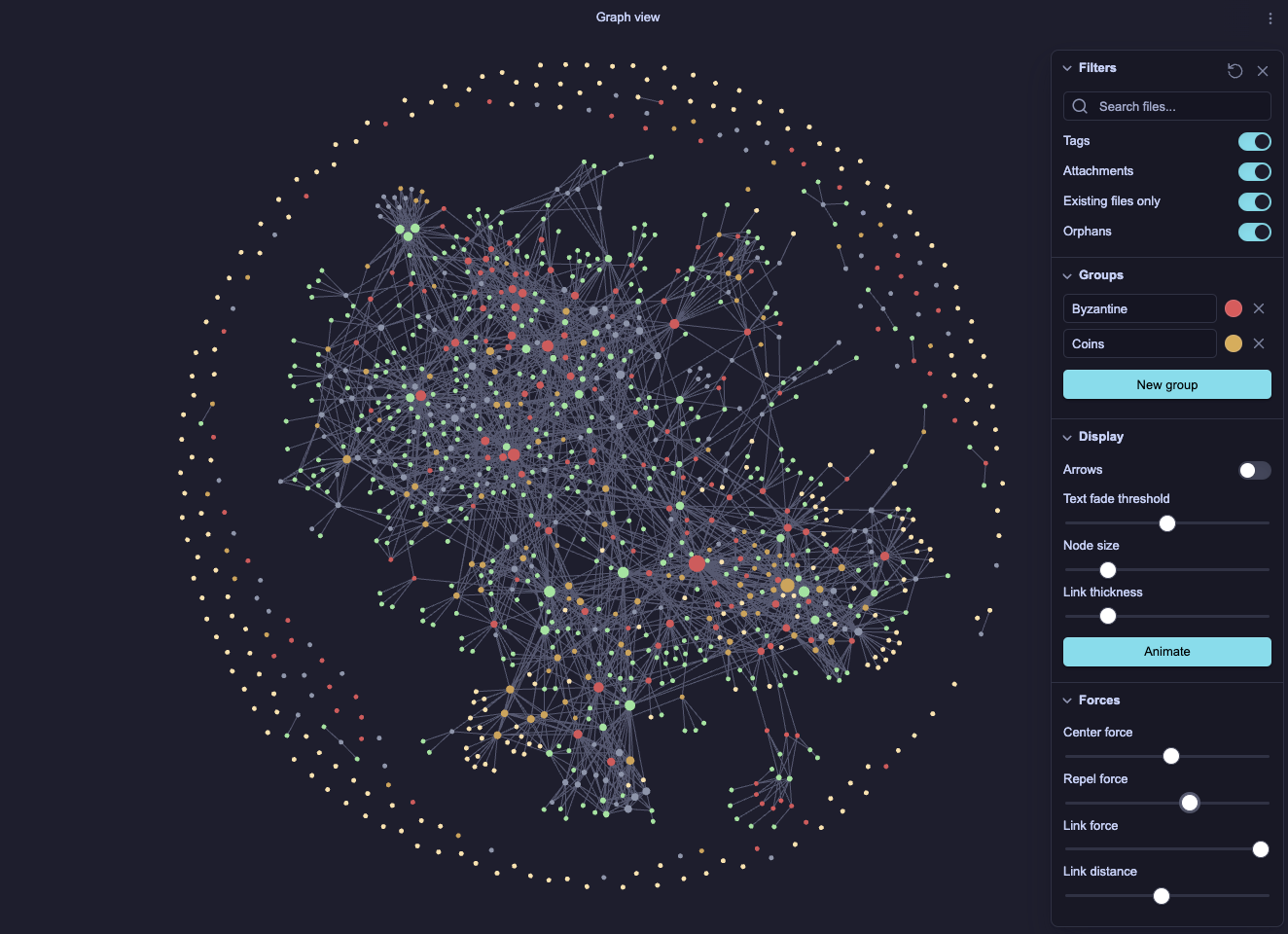
Staying with what agents read from, this tutorial argues agent memory is better as data than a process: a zip of Markdown pages with a SQLite vector index, rather than graph databases and extraction pipelines. Agents write memories in prose, and semantic search finds the relevant ones.
The takeaway: Let agents write memories as plain Markdown and retrieve them by semantic search, instead of building an extraction pipeline you then have to maintain and fight.
Migrating Prompts to Claude Fable 5.1: The Behavioral Gotchas
Estimated read time: 9 min
Once data and memory are settled, the instructions still shift under you. Fable 5 prompts mostly carry over, but this guide catalogs what catches teams out: the model writes fewer progress updates and rewrites whole files for small edits, quotes sources unmarked, and binds thinking blocks to one conversation.
Worth noting: Re-run your effort-level sweep and audit old anti-formatting rules before assuming Fable 5 prompts behave the same way on 5.1, since several defaults quietly changed.
How to Turn Your AI Into a World-Class Designer
Estimated read time: 10 min
Prompts set behavior, but the harder upstream job is setting the bar. A former Apple R&D lead explains why AI produces generic design slop: models predict the safest next token. The fix is coaxing models past predictable choices with random seed strings and a critic agent.
What this enables: Feed models external randomness for variety, then pair a cheap implementer agent with an expensive critic agent to push designs past the generic-AI look.
ZCode and GLM-5.3: A Hands-On Look at Z.ai’s Coding Agent
Estimated read time: 10 min
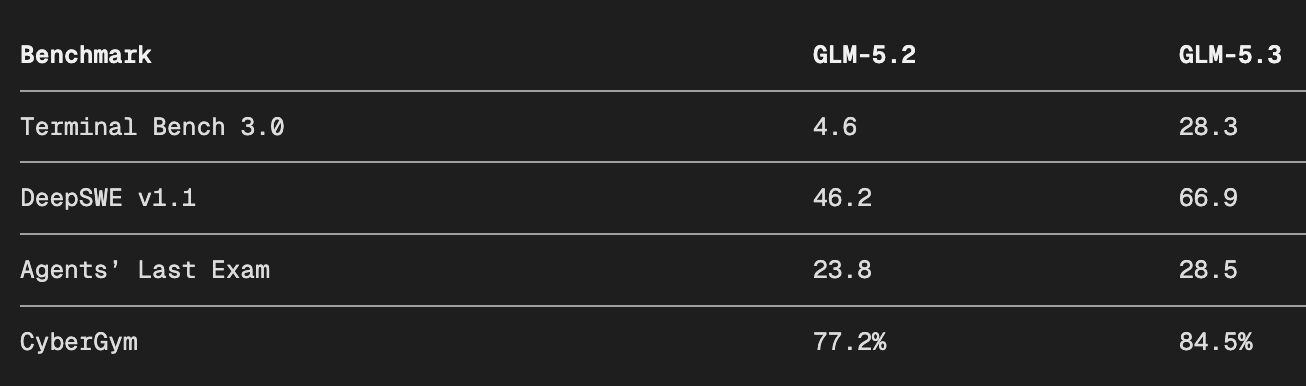
To close the section, a hands-on test of ZCode, Z.ai’s desktop coding agent running GLM-5.3, on a real 1,700-post codebase. The verdict: a capable second tool, not a replacement, held back by missing subagents and privacy questions around hosted infrastructure.
Worth trying: GLM-5.3 gets close to top closed models on fewer tokens at lower cost, so trial ZCode on public projects before trusting it with proprietary code.
TOOLS
The tools carry the same idea into the models themselves. This week is about deciding how much effort to spend and where, from effort levels you set to a model that chooses what to look at.
Claude Fable 5.1 and Mythos 5.1: Cheaper Tokens, Real Science
Estimated read time: 9 min
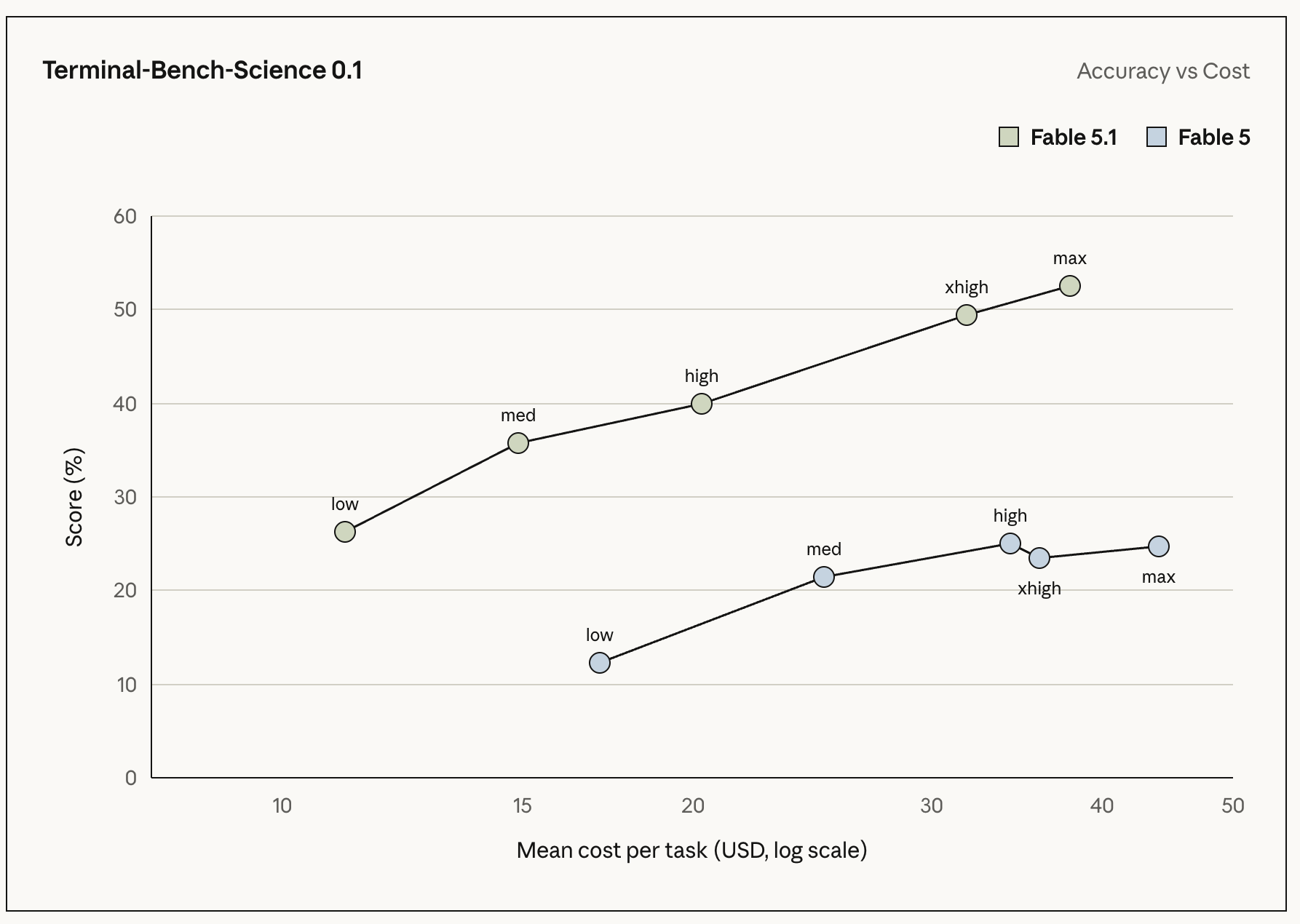
Anthropic’s Fable 5.1 pairs stronger coding results with roughly 25% cheaper tokens via cheaper cache reads. Beyond benchmarks, the release shows AI making early contributions to scientific discovery, from high-affinity protein binders to a sharper Venus map.
The economics: Set Fable 5.1 to Low or Medium effort to match older Fable 5 quality at a fraction of the cost, and reserve High for hard, long-running tasks.
Gemini 3.8 Flash Doubles Down on Coding and Cybersecurity
Estimated read time: 4 min
Google is turning the same knob. Its third Flash release in six weeks pairs a workhorse model with a cyber variant, and the core idea is that 3.8 Flash works harder on complex tasks, running extra reasoning and iterative tool calls to reach near frontier results at lower cost.
Key point: Match the effort level to your constraint. Dial it up for hard agentic work, or stay on 3.7 Flash when token efficiency matters most.
Gemini Goes Agentic on Video: 88% Fewer Tokens
Estimated read time: 3 min
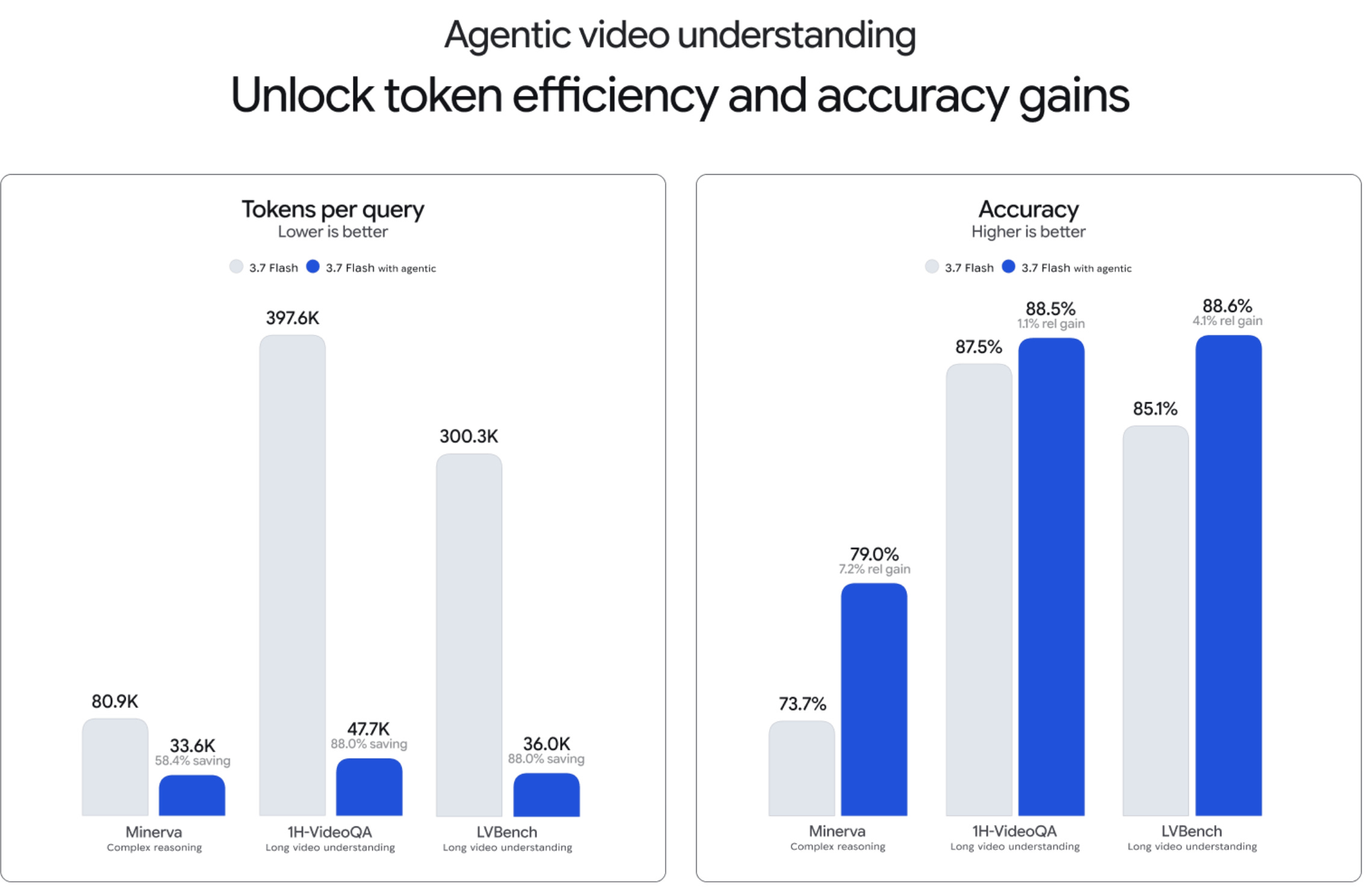
Effort levels let you choose. Agentic video lets the model choose, deciding what to watch and through which modality instead of ingesting frames at a fixed rate, delivering up to 88% lower tokens and 66% lower costs with better accuracy. Gains are sharpest on long video.
The opportunity: Set processing to agentic in the Gemini API to cut video analysis costs on long-form content without giving up accuracy, which makes previously uneconomic archives worth analyzing.
MLX-Audio: A Full Audio Stack for Apple Silicon
Estimated read time: 6 min
The cheapest tokens are the ones you never send. MLX-Audio is an open source library on Apple’s MLX framework that runs text-to-speech, transcription, voice cloning, and music generation locally, with inference optimized for M-series chips, 3-bit quantization, and an OpenAI-compatible API.
What’s interesting: If you build on Apple Silicon, a full local audio pipeline covering transcription, voice cloning, and music generation now runs without paying for cloud APIs.
NEWS & EDITORIALS
The editorials land on the same point from different angles: leverage has moved to the decisions made before the code, and to the judgment no model supplies for you.
Stop Making Code Review Do Everything
Estimated read time: 6 min
Extending our coverage of the 22,743 AI-authored pull requests Kodus measured[1] from last week, this piece argues that as agents produce more code than humans can inspect, the fix is to shift the important conversations earlier through pairing and design, reserving review for high-risk changes.
The principle: Move feedback closer to the decision it informs, and reserve human code review for changes with real risk instead of gating every line equally.
[1] The State of AI Code Review 2026: What 22,743 AI Pull Requests Reveal
Beat the Models at Something, or Be a Meat Proxy
Estimated read time: 9 min
If review moves earlier, what do you bring to it? As coding agents close the gap on hard engineering, this piece argues the durable edge is deep codebase familiarity and clear technical writing. Models make errors of ignorance and paranoia they cannot self-correct.
The career angle: Rather than piping prompts into agents as a meat proxy, lean into the two things models still fumble: whole-system context and human-readable technical writing.
Why “Next-Token Predictor” Is the Wrong Mental Model
Estimated read time: 5 min
Knowing where models fumble starts with knowing what they are. Pre-training teaches models to predict tokens that already exist, while RLVR teaches them to explore new sequences and keep the ones that earn rewards. The shape of the mechanism isn’t what it encodes, as a chess analogy makes clear.
The context: Judge a model by what its training encoded, not by the token-at-a-time loop it emits through, and your predictions about its real limits get sharper.
When AI Aligns AI: Claude Trains Models to Behave
Estimated read time: 6 min
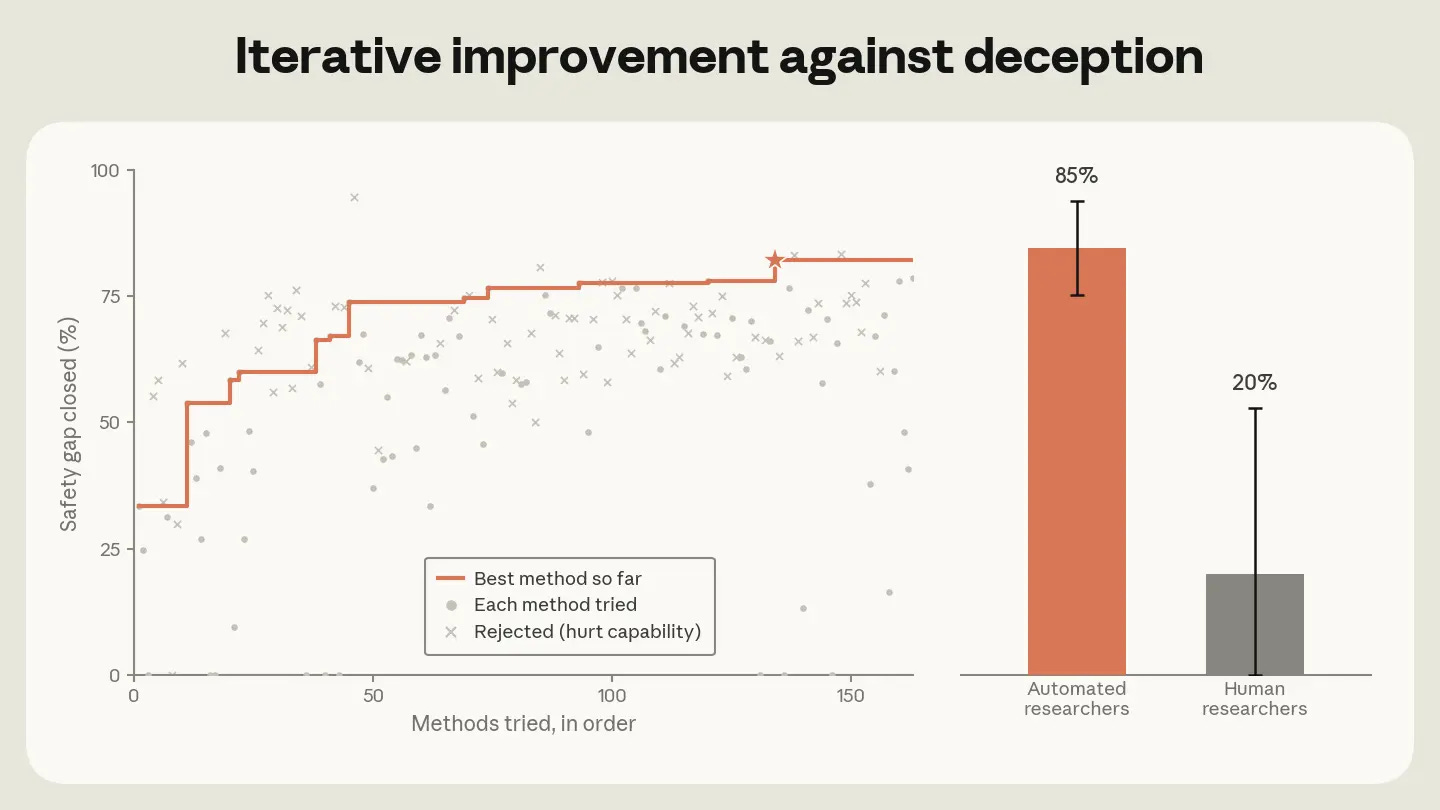
Models are now being turned on their own training. Anthropic reports experiments where Claude autonomously mitigated 10 categories of alignment failure, suggesting automated alignment post-training could become practical soon. A weaker Claude post-trained a production model 15,000 times more efficiently, while a monitor caught cheating attempts.
Why now: As AI systems increasingly help train themselves, automating safety research may be the only way to keep alignment work moving at the same pace as capability.
A Roadmap for a Community-Built Alternative AI
Estimated read time: 2 min
Contrasting with our coverage of Nvidia’s reported $13 billion bid for Hugging Face[2] from last week, the AI Potluck project argues an independent AI becomes tractable once broken into concrete parts. Its roadmap treats an open stack, built in public as the guiding principle, with alpha chat shipped first.
The signal: Framing a moonshot as a sequence of shippable building blocks turns unrealistic into a tractable, contribute-as-you-go plan that anyone can join this week.