


Welcome back to Altered Craft’s weekly AI review for developers, and thank you for starting another week here. This edition keeps landing on the same quiet truth: the model is the part you can’t change, and everything around it is where the leverage lives. Context compilers, persistent memory, unified harnesses, loop verifiers, evals as files, code graphs, guardrails. Even the editorials agree, with a four-tool agent beating heavyweight rivals and domain expertise still steering the whole thing.
TUTORIALS & CASE STUDIES
The tutorials all work the machinery around the model. What reaches the context window, what survives compaction, where the agent itself lives, and when its loop should stop.
A Context Compiler for Coding Agents (Not Bigger Windows)
Estimated read time: 9 min
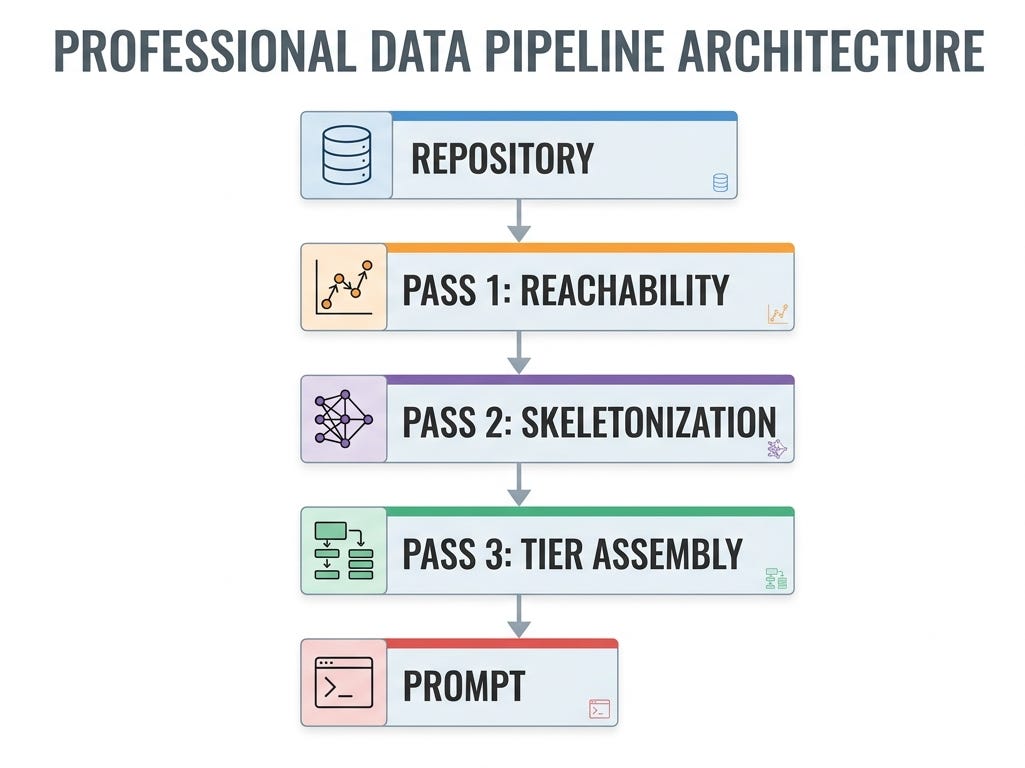
Building on our look at last week’s refactoring experiment[1], which cut agent input tokens by restructuring the repo, this pipeline attacks the same waste at prompt-build time. It treats prompt building like a compiler, tracing what a target file reaches and stripping dependencies to interfaces. Building prompts with a compiler’s discipline cut prompt sizes 69–74% in under 75ms.
The takeaway: You don’t control the size of the context window, so control what you feed into it by trimming unreachable code before the model sees it.
[1] Does Refactoring Pay Off in an Agent-Built Codebase? An Experiment
Giving Claude Code a Memory That Survives Compaction
Estimated read time: 9 min
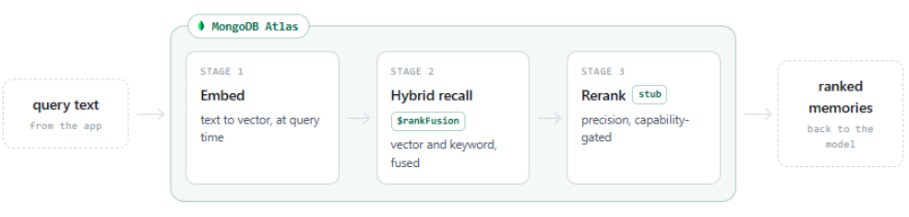
Curating what enters the window is half the problem; keeping it is the other half. When Claude Code hits its context limit, compaction silently drops old outputs and summarizes away constraints. This tutorial’s fix is a cross-thread store paired with a PreCompact hook on MongoDB Atlas, running embedding, hybrid recall, and reranking inside the database.
What this enables: Persist your session’s decisions and constraints to a searchable store before compaction discards them, and hook the write to fire automatically when the window compresses.
One Agent, Every Surface: How Kiro Unified Three Codebases
Estimated read time: 15 min
Shifting from the context window to the harness around it, Kiro’s IDE, CLI, and web clients each ran their own agent, forcing every feature to be built three times. The team consolidated them into a single agent harness running as a standalone server process, so features ship everywhere at once.
The design lesson: Treating your agent as a standalone protocol-driven process, not a compiled-in library, lets features ship to every client at once and enforces a boundary shared libraries never quite hold.
Loop Engineering: Knowing When to Stop
Estimated read time: 10 min
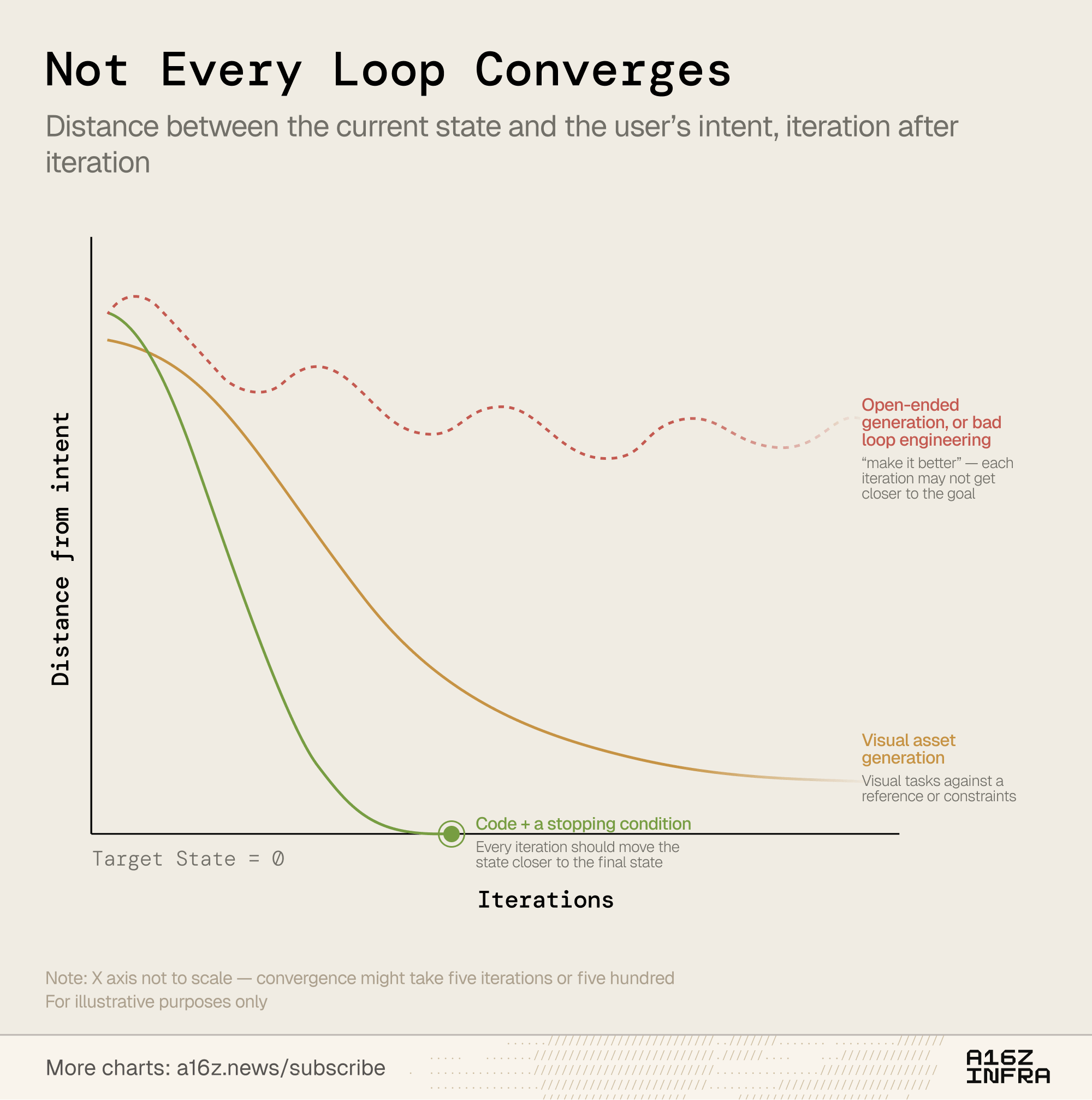
With the harness settled, a runtime question remains. As agents shift from prompts to self-running loops, the hard part is knowing when to stop. This a16z piece argues a loop is only as good as its verifier, showing a Lighthouse run that burned two-thirds of its budget for zero gain.
Key point: Design agent loops with an explicit target state, observable current state, local edits, and a stopping rule tied to cost, because the model will happily iterate forever. I’ve done some of this work in a research agent harness I work on; Tilth. The harness employs configurable circuit breakers and what I call hyper observability.
TOOLS
The tools split the same way. Two models racing ahead on their own, then the scaffolding that makes any of them dependable: evals, chart specs, code graphs, packaging, and guardrails.
Qwen3.8-Max and the Push Toward Multi-Day Autonomous Coding
Estimated read time: 9 min
Qwen’s newest 2.4-trillion-parameter model runs coding tasks for days unaided, building a self-evolving harness through feedback loops. It reproduces research papers, improves on them, and climbs real leaderboards, delivering production-quality work across coding and long-horizon tasks.
The signal: Frontier models are shifting from answering prompts to owning open-ended, multi-day projects, so plan for how autonomous agents fit into your engineering loop before they show up in your repo.
DeepSeek-V4-Flash-0731: Small Activated Params, Big Agentic Gains
Estimated read time: 4 min
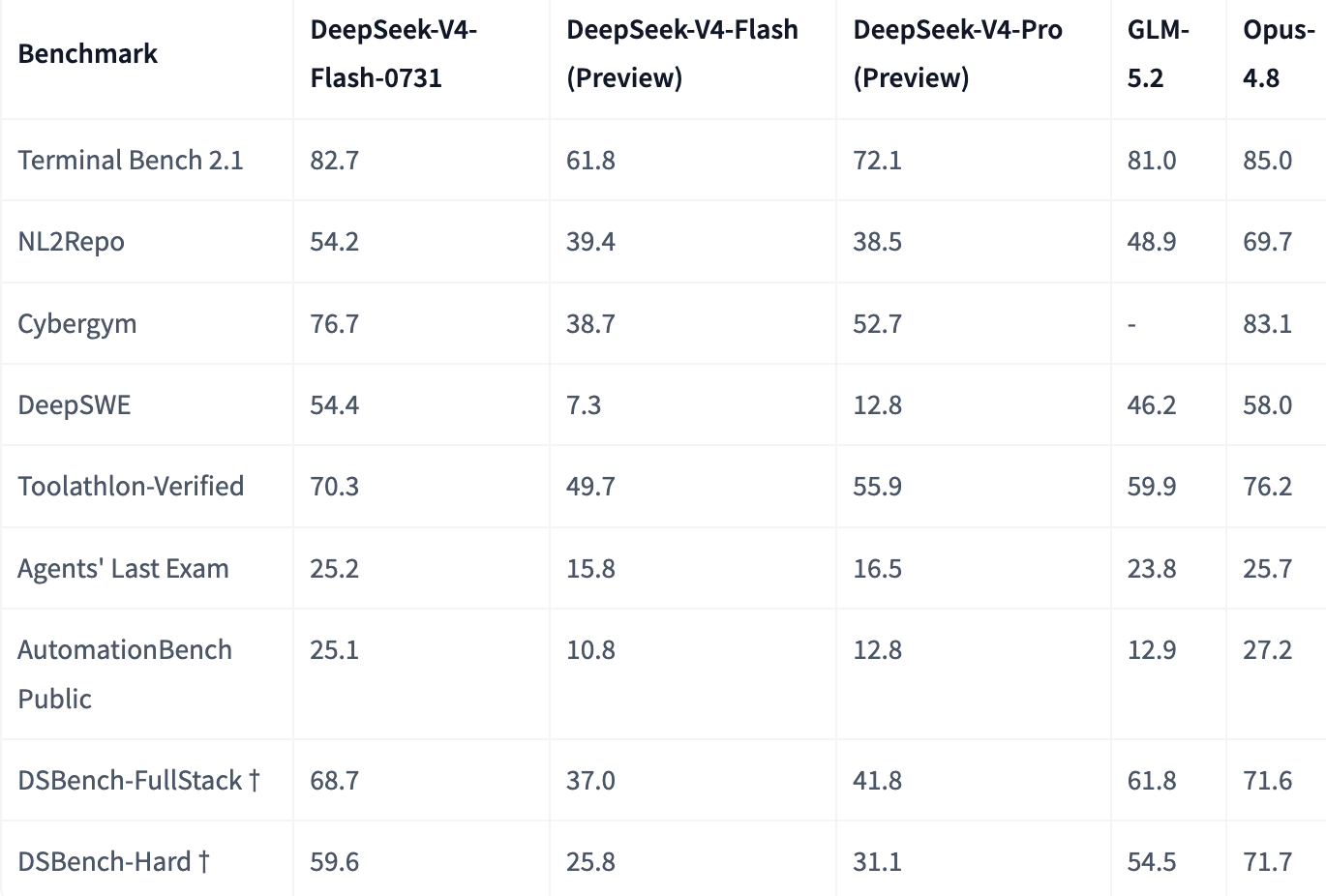
In more open-model news, DeepSeek’s official V4-Flash release leans into coding and agentic work, posting gains over its own V4-Pro preview despite far fewer activated parameters. It ships DSpark speculative decoding, three reasoning-effort levels, MIT licensing, and vLLM and SGLang recipes.
Worth noting: If you’re building coding agents, an MIT-licensed model with strong Terminal Bench and DSBench numbers plus baked-in speculative decoding is worth a serious look before defaulting to proprietary options.
smevals: A Filesystem-Native Framework for Evaluating Models
Estimated read time: 9 min
With new checkpoints landing weekly, judging them becomes the bottleneck. smevals treats model evaluation as composable files: Evals hold Tasks, Configs drive Runners, and Graders apply Checkers. By separating gathering evidence from judging it, immutable Runs can be regraded with new rubrics without re-executing any model calls.
What’s interesting: Decoupling evidence from judgment means you pay for model calls once, then iterate on rubrics and graders as often as you like, turning eval design into fast, cheap experimentation.
Flint: An Intermediate Language for LLM-Generated Charts
Estimated read time: 6 min
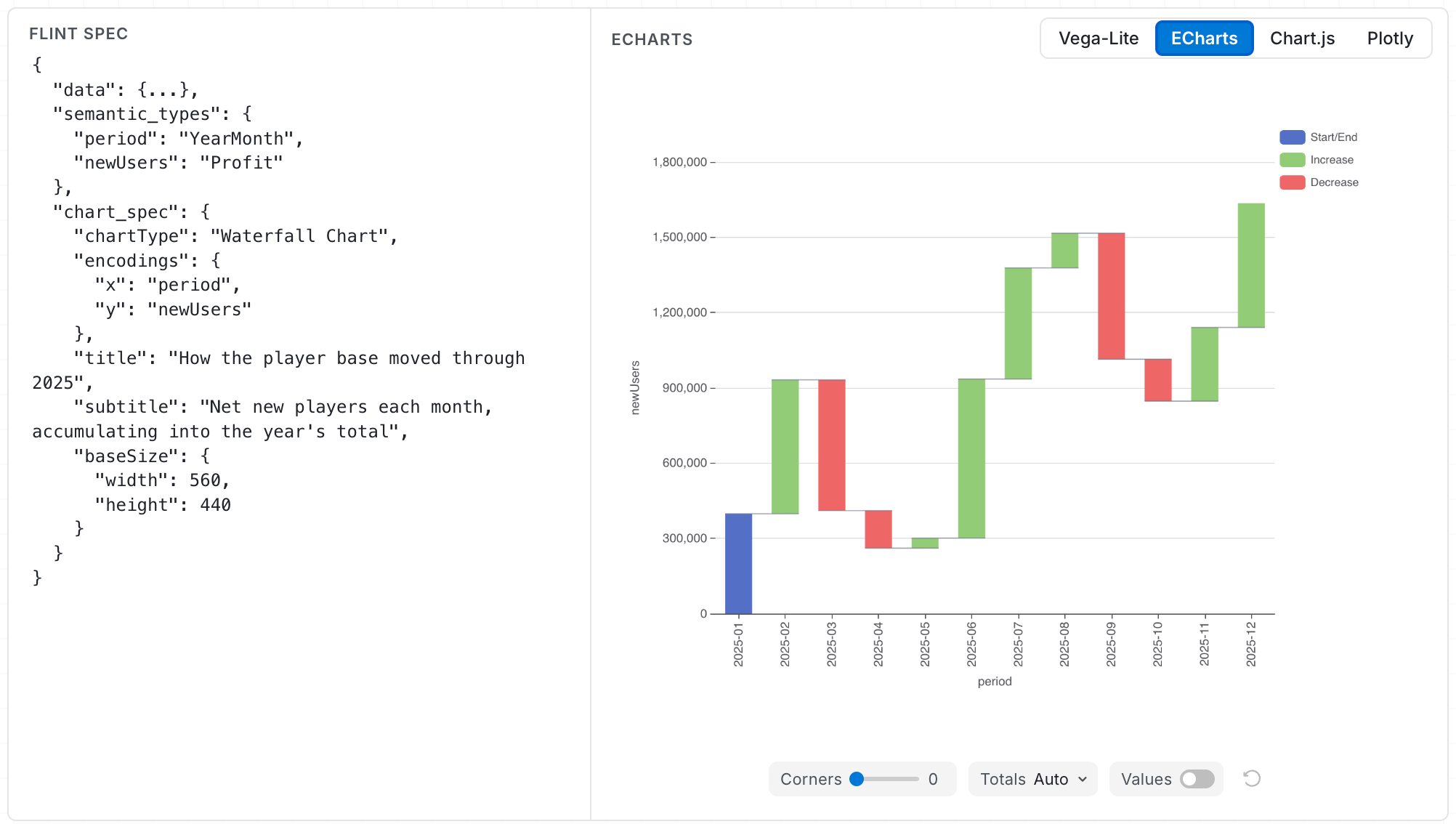
The same spec-first sensibility shows up in charting. Flint is a semantics-driven intermediate language for visualization: declare what each field means and the chart you want, and a compiler derives scales, axes, and layout. It lets agents emit compact specs instead of brittle native ones, targeting Vega-Lite, ECharts, Chart.js, Plotly, or Excel.
The opportunity: Short specs are easier for agents to emit and for you to review, and compiling one spec to any backend beats debugging hand-rolled chart code in five libraries.
Graphify: Query Your Codebase as a Graph Instead of Grepping Files
Estimated read time: 8 min
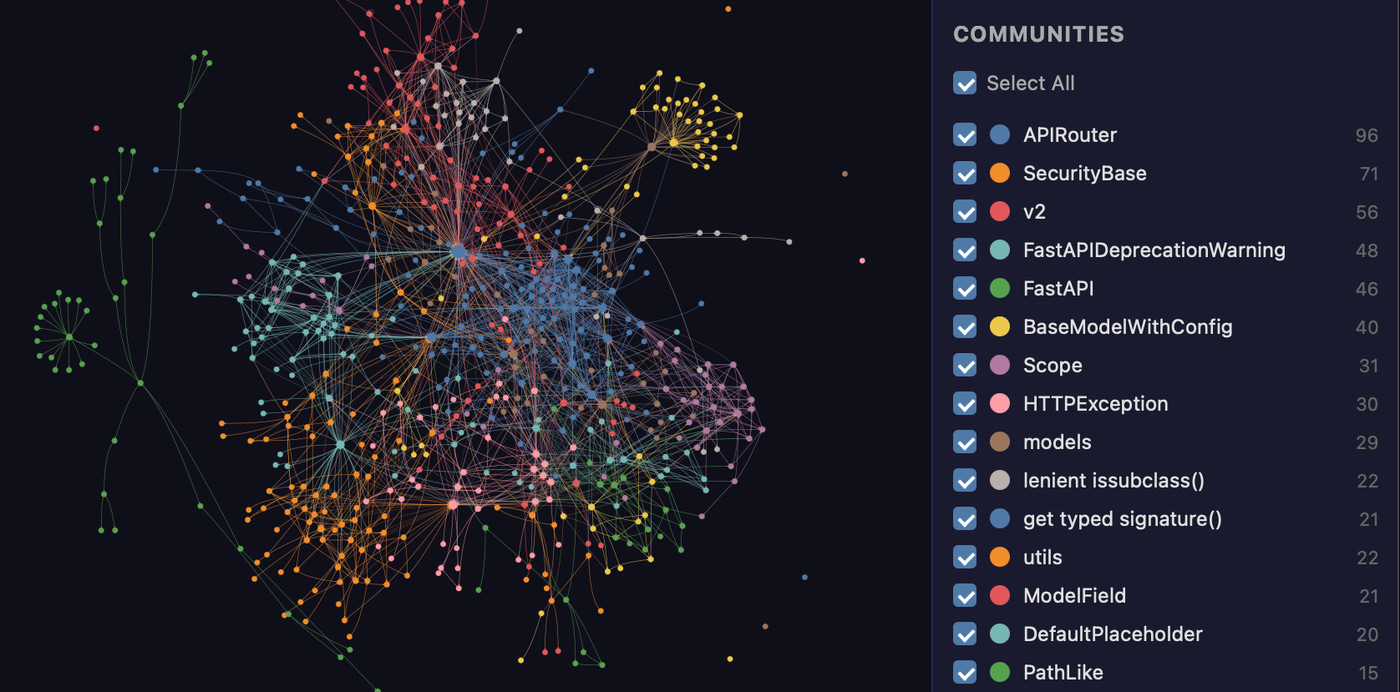
Applying similar structure to whole repositories, Graphify maps a project into a queryable knowledge graph via /graphify. Code parses locally with tree-sitter AST, giving you a real graph you traverse rather than a vector index, with every edge tagged extracted or inferred.
What this enables: Instead of grepping raw files, your assistant queries, traces, and explains a graph spanning code, docs, and media, with every edge carrying provenance you can check.
Agent Plugins: One Package Format for Skills and MCP Servers
Estimated read time: 4 min
Once you’ve built skills and servers, distribution becomes the problem. Agent Plugins 1.0.0 introduces a vendor-neutral standard for packaging Skills and MCP servers into portable plugins. A minimal plugin.json manifest and fixed directory locations let authors package once and load across clients like ChatGPT, Cursor, Copilot, Kiro, and VS Code.
Why now: A vendor-neutral format landing while the ecosystem is young means what you package once loads everywhere, and adopting it early beats maintaining per-client formats later.
Shieldstral: Content Moderation as a Question You Write Yourself
Estimated read time: 7 min
Whatever you ship still needs guardrails. Mistral’s new 3B open-weights safety classifier reframes moderation so policies live in the prompt, not the weights. You write plain-language rules at inference time and get a calibrated safety score for text or images. Apache 2.0, one 16GB GPU.
Why this matters: If your product needs context-specific guardrails, a classifier that reads your policy at inference time beats retraining a fixed taxonomy for every deployment, and the license keeps it cheap to trial.
NEWS & EDITORIALS
The editorials weigh who steers all this machinery. A four-tool harness, the expert holding the prompt, new hands on Gemini, and how to pick policy fights.
Pi’s Minimalism Is Its Advantage
Estimated read time: 7 min
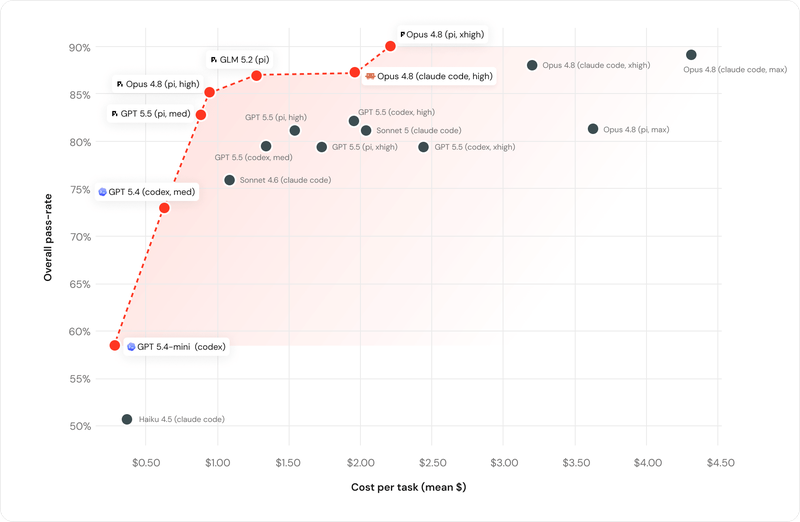
Continuing our coverage of agent economics from last week’s prompt-caching deep dive[2], Databricks’ benchmark shows the harness dramatically impacts cost and quality. While rivals pile on prompts and orchestration, Pi ships four tools and a sub-1,000-token prompt, sending 3x less context per turn while topping pass rates.
Key point: Judge coding agents on end-to-end economics, tokens per task and context per turn, not sticker price per million, because the harness moves those numbers more than the model does.
[2] Why Prompt Caching Makes or Breaks Your Coding Agent’s Bill
Why Domain Expertise Still Wins in the LLM Era
Estimated read time: 5 min
If the harness matters that much, so does the hand steering it. Since everyone queries the same models, prompting looks skill-free. This piece argues the most important skill in prompting is domain expertise, using Terence Tao’s terse ChatGPT math exchanges to show how knowing your codebase lets you steer and extract far more.
The career angle: Deep familiarity with your own systems lets you steer an LLM harder and pull out solutions a novice never could, so keep building real domain knowledge.
Demis Hassabis Steps Back From DeepMind’s Driver’s Seat
Estimated read time: 3 min
Shifting to industry news, Sundar Pichai and Demis Hassabis announce a DeepMind reshuffle in messages published by Google. Hassabis becomes Chair and Alphabet Chief Scientist to focus on shaping the future of AGI, while Koray Kavukcuoglu takes over Gemini development as SVP.
The context: Leadership changes at a frontier lab ripple into models and developer tooling, so Kavukcuoglu’s priorities are the early signal for where Gemini’s roadmap heads next.
Open Questions on Open Weights
Estimated read time: 10 min
Zooming out to policy, with over a hundred companies backing open-weights AI, this piece argues for strategic neutrality: preemptive bans burn political capital on unwinnable fights. Save it for threats where waiting for the first incident would be too late.
Worth noting: Pick regulatory battles by asking whether the danger allows a reactive fix; if government acts after the first incident, don’t spend goodwill banning it early.