


Hello, and welcome back to Altered Craft’s weekly AI review for developers. Thanks for spending part of your week here. A common thread in this edition is checking the work: the Claude Code team explains how verification lets them delegate more, three pieces cover decision models that attach a calibrated probability to each answer, and a 250,000-page proof waits for someone to verify it. You’ll also find Gemini 4 Neon and a reasoning model that runs on a phone.
TUTORIALS & CASE STUDIES
This week’s tutorials start with what runs around an agent loop, then turn to cost: when to switch models and when to skip the LLM call. Two pieces on verification close the section, one from the Claude Code team and one on making distributed bugs repeatable.
The Five Primitives Behind Always-On Agents
Estimated read time: 12 min
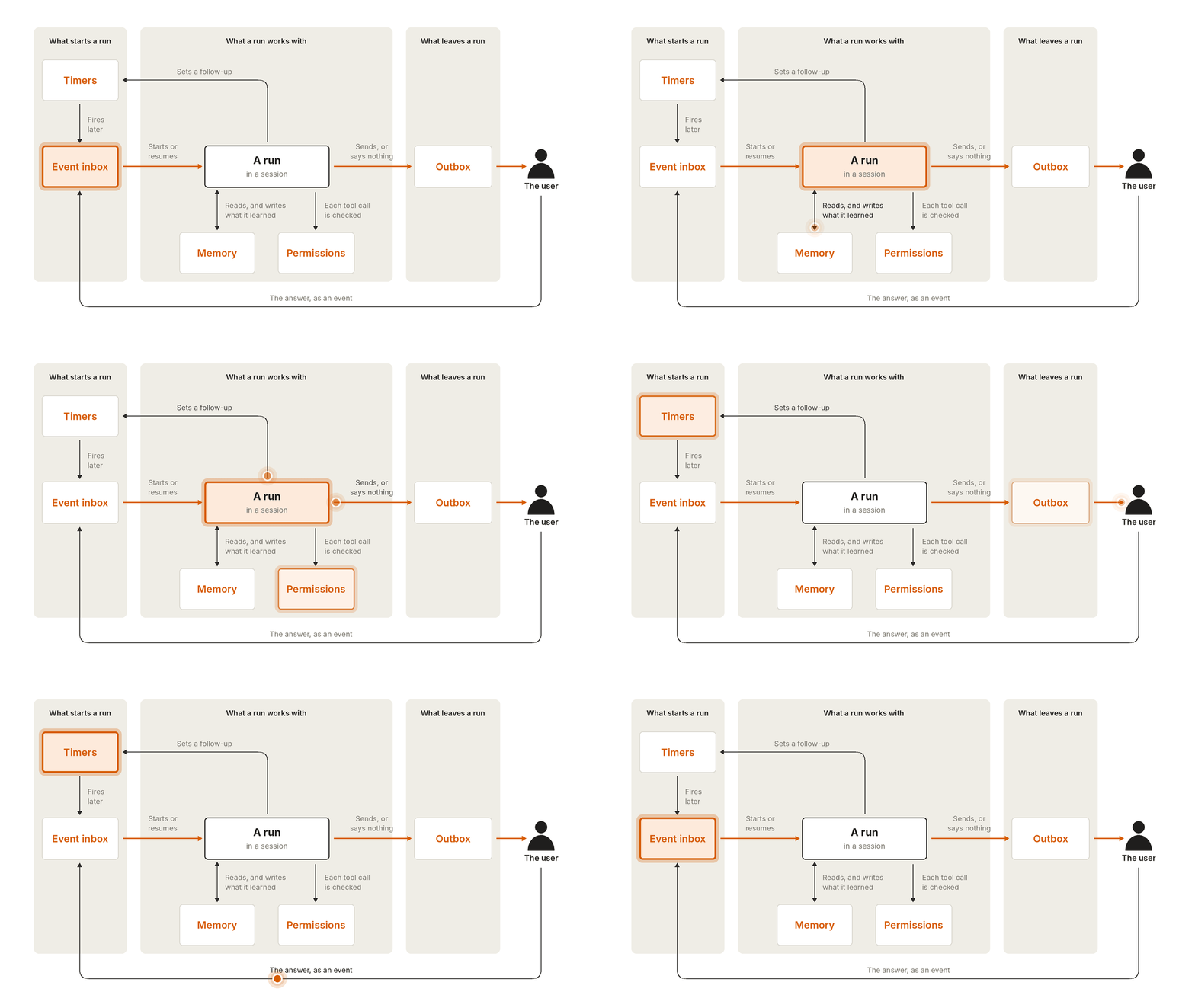
Following our look at Anthropic’s research on agent memory[1] from last week, they now map the rest of the structure. An always-on agent sleeps and wakes on events. Five primitives, event inbox, timers, memory, permissions, and outbox, show how the architecture around the loop, not the loop itself, creates proactive behavior.
Key point: Proactive behavior comes from durable parts around the agent loop, not from a smarter loop. If you want an agent that acts unprompted, build the inbox, timers, and permissions first.
[1] How Claude Learns to Remember: Agent Memory, Salience, and “Dreaming”
Switching LLMs Mid-Conversation Is a Ski-Rental Problem
Estimated read time: 15 min
While our coverage of Google’s Gemini 4 Hydrogen[2] last week showed an orchestrator switching models mid-session, Edgee prices that move. For coding agents, the hard question is when a live session should change models, since every switch throws away the warm prompt cache and pays to rebuild it.
In practice: If you route between models mid-session, price the cache rewrite as a one-off purchase. Switch only once the savings you would otherwise give up are larger than that cost.
[2] Gemini 4 Hydrogen: The Execution Half of a Multi-Model Workflow
Decision Models: Typed Answers With a Probability Attached
Estimated read time: 9 min
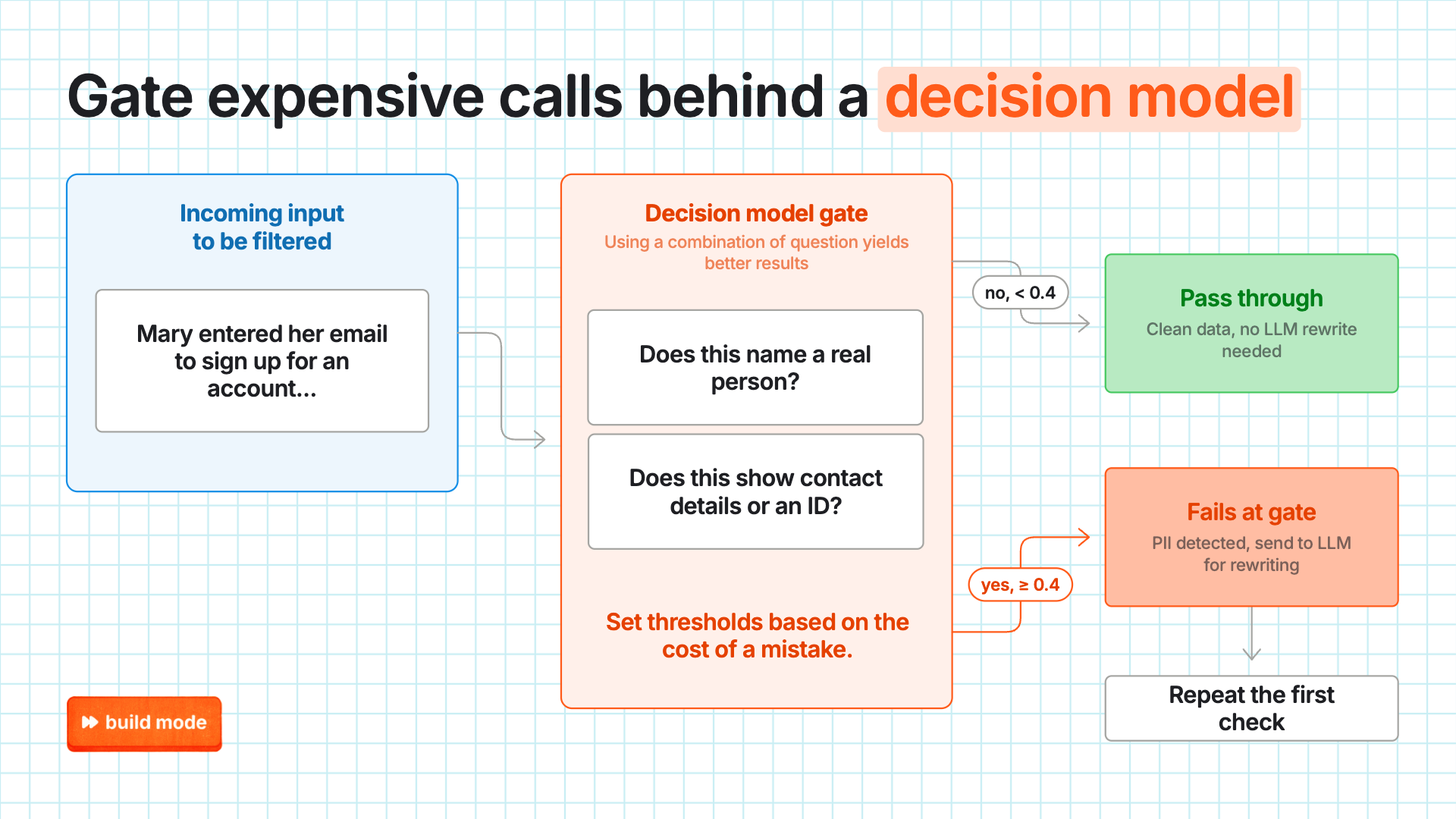
Another way to cut cost is to skip the LLM. Continuing our coverage of decision models, which began with Google’s Decisions API[3] last week, PostHog routes simple yes/no checks through them and gets typed answers with calibrated probabilities. 98.7% of session summaries skip the LLM call entirely, with thresholds tuned to whichever error costs more.
The opportunity: Put a cheap decision model in front of expensive LLM calls for checks too fuzzy for a regex. Set the confidence threshold based on which mistake hurts more, a false positive or a false negative.
[3] Gemini’s Decisions API Turns Classification Into a Single Forward Pass
Don’t Ship a Decision Model on the Default Threshold
Estimated read time: 12 min
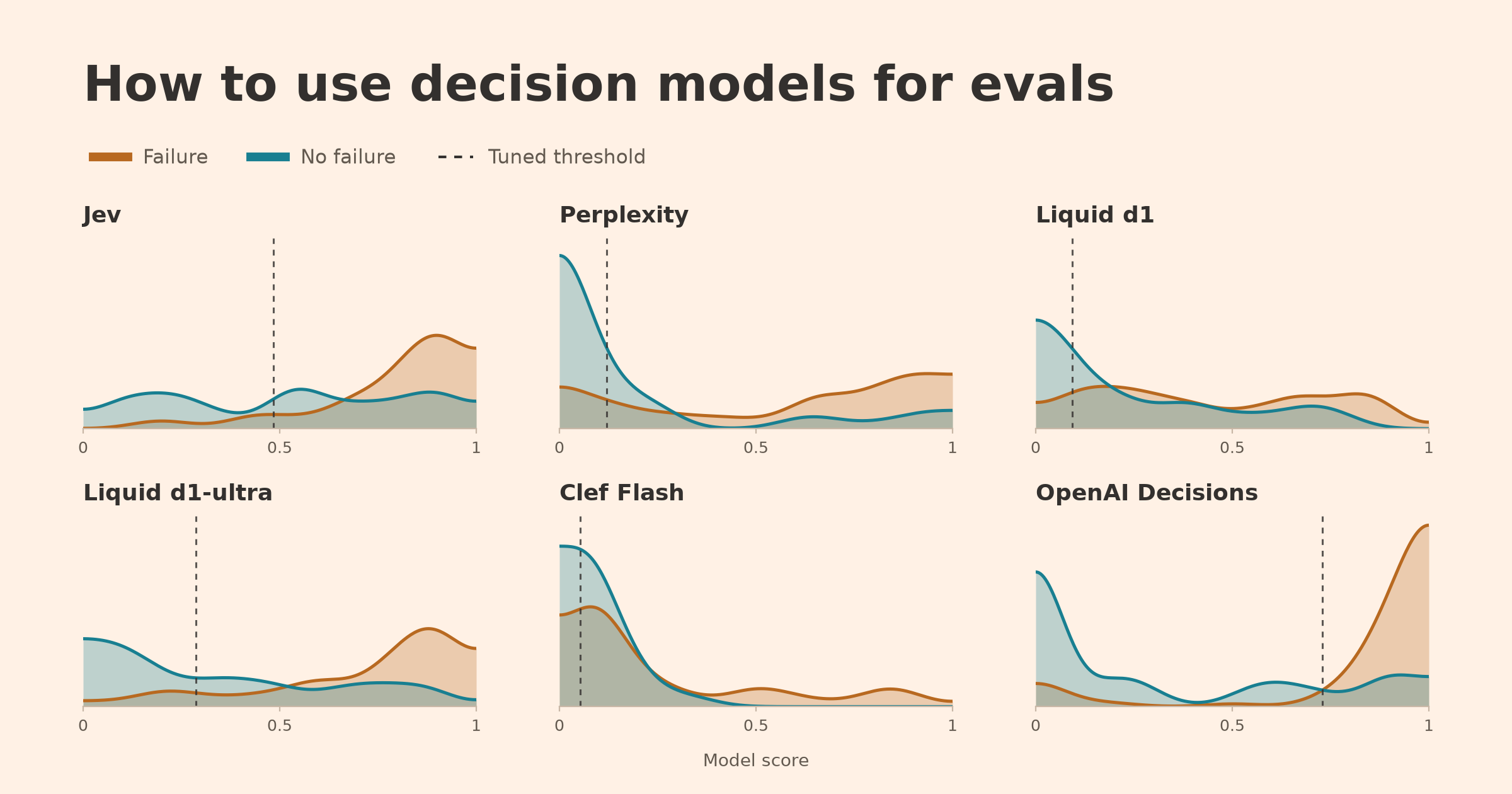
Taking that threshold advice further, this walkthrough shows that the default 0.50 cutoff often leaves performance unused when decision models run automated evals. It tunes thresholds against labeled traces, compares cost against F1, and tests probability calibration.
Try this: Set your precision and recall minimums first, then tune the decision threshold on your own labeled data. Only after that should you compare models on price.
How the Claude Code Team Thinks About Verification
Estimated read time: 12 min
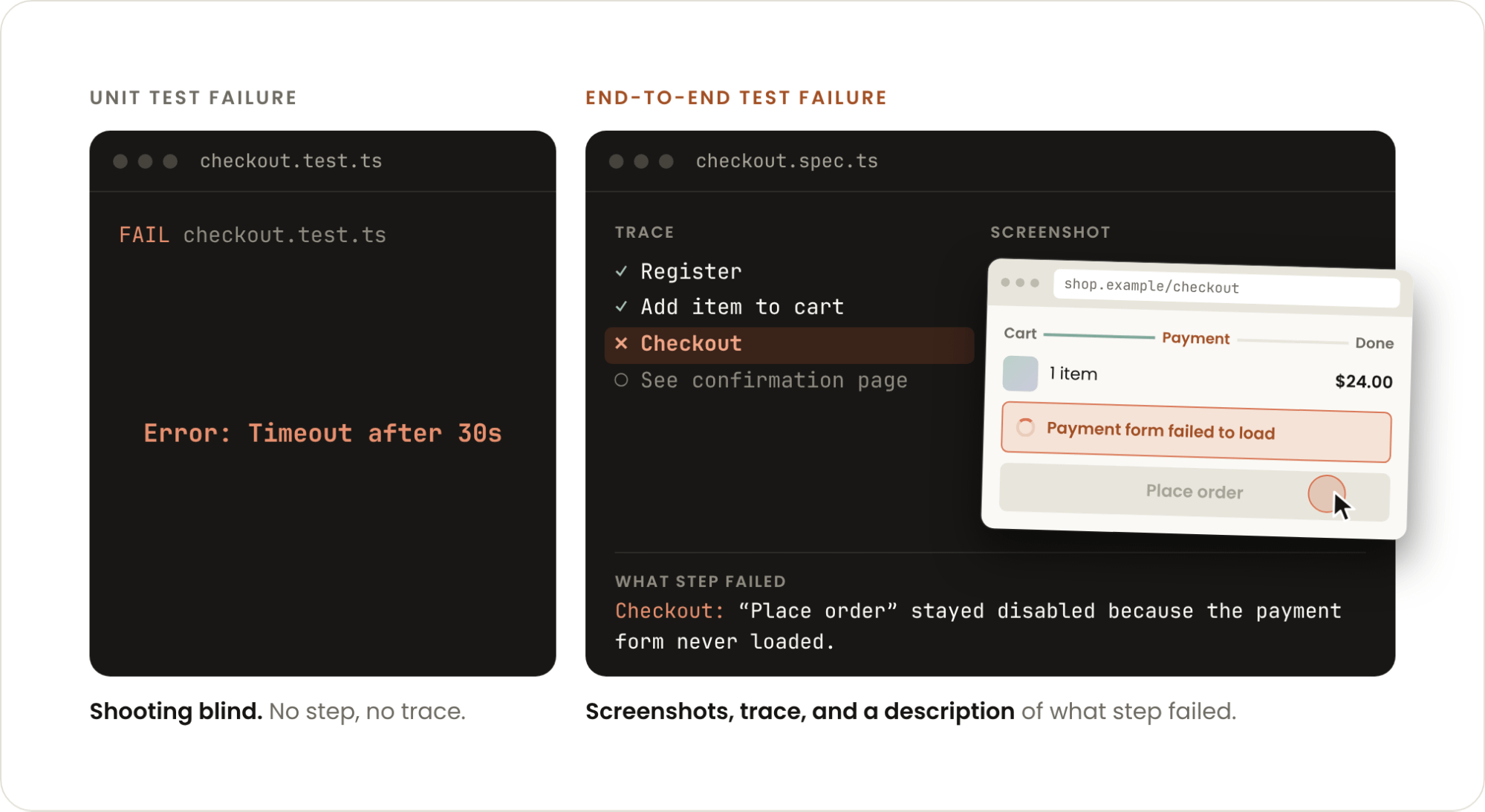
Shifting from checking model output to checking code, the Claude Code team, where Claude writes roughly 90% of the code, details how verification loops scale delegation: end-to-end, property, and differential tests, plus review rules a change can’t modify, commit gates, and misses turned into rules.
The technique: Give your agent a fast, reliable way to run and inspect the real app before it commits. Your job then shifts from reading every diff to defining what “done” means.
Deterministic Simulation Testing: Making Distributed Bugs Reproducible
Estimated read time: 12 min
Verification is harder when a failure won’t happen twice. Distributed systems fail in gray, not clean, ways. This piece argues that reproducing a bug matters as much as finding it, and shows how running a whole cluster on one thread with simulated clock, network, and disk makes failures repeatable.
Why this matters: If your test harness can’t control the clock, the scheduler, the network, and the disk, it can’t replay the bug it just found. Control those four and each failure becomes a test you can rerun.
TOOLS
The tools run from a frontier model for long agent workflows to a reasoning model that fits on a phone. A calibrated decision model, a browser tool that uses your own logins, and a language with machine-checked rules follow.
Gemini 4 Neon: Frontier Reasoning Tuned for Agent Workflows
Estimated read time: 10 min

Google’s Gemini 4 Neon targets long-running agent workflows, pairing frontier-level reasoning with 32% lower cost per task than Carbon. It leads coding agent benchmarks, resists prompt injection, and ships across the API, Antigravity, and the Gemini app.
Worth noting: Pick the thinking level to match the workload. The harness around the model can change agentic coding results as much as the model itself, so test both together.
Embla 1: A 4-Bit Reasoning Model That Runs on Your Phone
Estimated read time: 7 min
At the other end of the scale, Embla 1 is a 4-bit reasoning model running offline on an iPhone, scoring 57.4 across five benchmarks in 1.77 seconds. The write-up details architecture, distillation and RL stages, and trades a few accuracy points for far faster answers.
What’s interesting: On-device inference is now a real design option. The deciding number is often tokens per answer, not benchmark score, which matters for anything that must work offline or respond quickly.
Liquid AI’s d1.2 Decision Models Add Audio Input and Calibrated Confidence
Estimated read time: 6 min
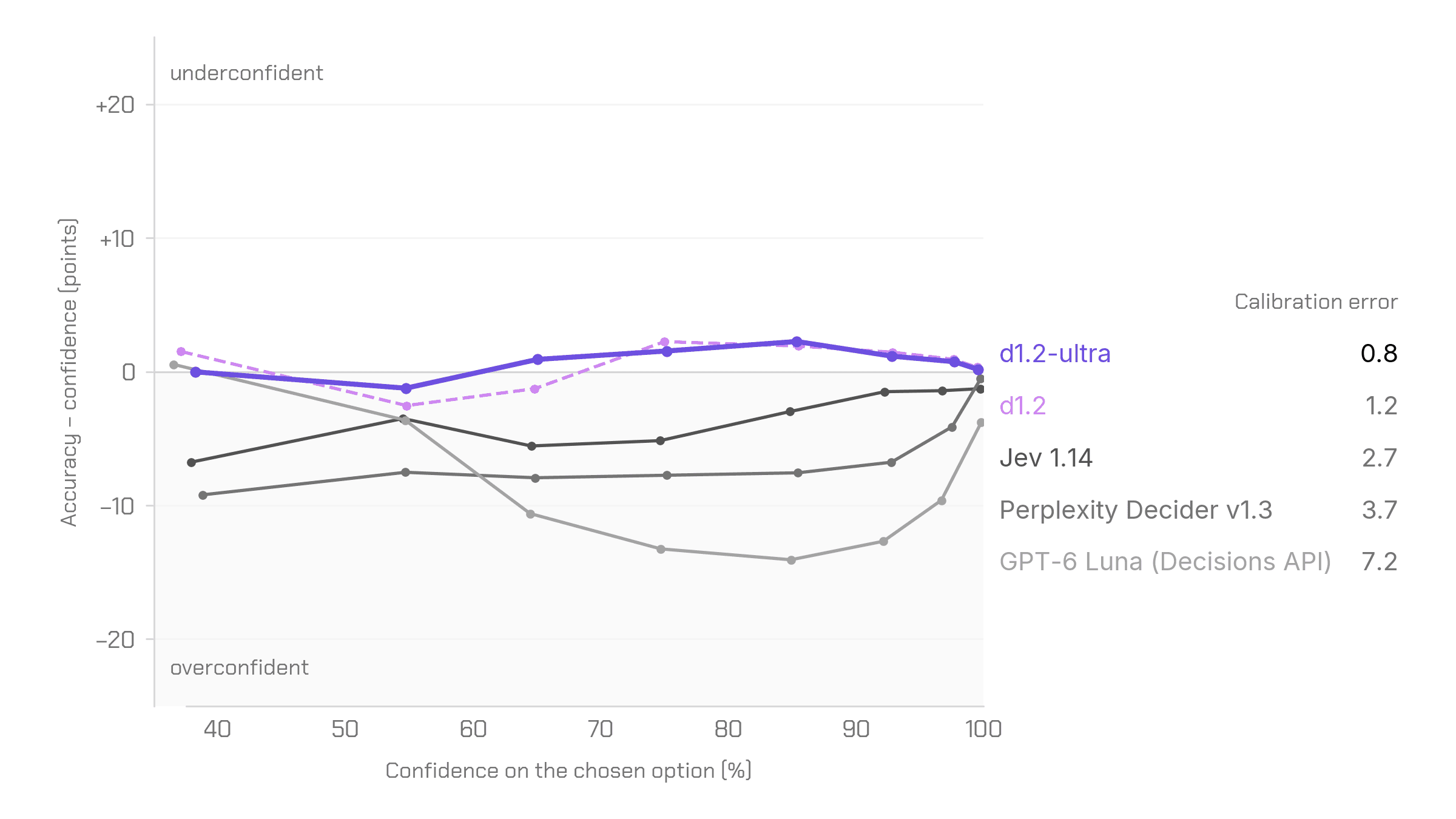
Returning to the decision models from this week’s tutorials, Liquid AI’s d1.2 and d1.2-ultra add audio input, bounding boxes, span extraction, and numeric estimates. The standout is calibration error under one point, which makes confidence thresholds for human review trustworthy.
What this enables: When a model’s probabilities are well calibrated, you can send low-confidence outputs to human review. That replaces guessing where your pipeline fails with a number you can set and measure.
OpenCode Browse: Agents That Drive Your Actual Browser
Estimated read time: 2 min
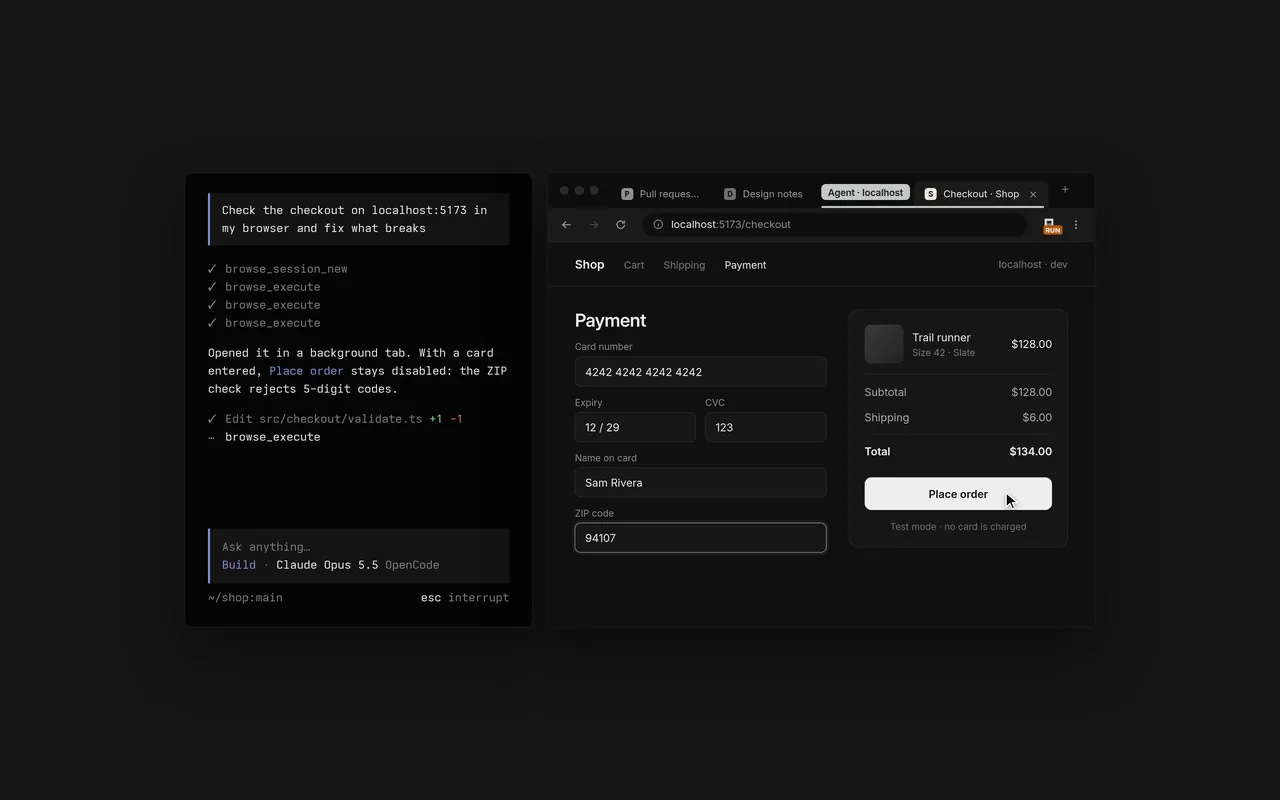
Shifting from models to agent tooling, OpenCode Browse pairs an MCP server with a Chromium extension so agents work in your real browser, with your existing logins. Tabs open in collapsed background groups, and agents hand control back for 2FA or payments.
The pattern: If browser automation keeps breaking on auth, let the agent use the session you already have instead of rebuilding it. Sensitive steps like 2FA and payments stay with you.
Bend: A Language That Proves Your AI Didn’t Break Anything
Estimated read time: 4 min
Where OpenCode Browse hands sensitive steps back to you, Bend puts the limits in the compiler. It pairs Python-like syntax with C-speed compilation, GPU parallelism, and Lean-style proofs. Rules declared in LAWS.bend become theorems an agent cannot violate, so a type check blocks bad AI commits before merge.
The takeaway: For guardrails your coding agent can’t argue around, encode them as machine-checkable proofs rather than prose in AGENTS.md. A failed check stops the merge, with no judgment call needed.
NEWS & EDITORIALS
The news opens with a proof far larger than anyone can check yet, and a theory that AI is finding old flaws faster than teams can patch them. A proposal on compute limits and an essay on the developer’s changing role close the edition.
A 250,000-Page Proof and Nobody to Check It Yet
Estimated read time: 4 min
Lean proofs also made the news this week. An Anthropic mathematician says he used a non-public Claude to build a 250,000-page Lean proof of the Riemann hypothesis, while verification remains months away and scholars question AI firms’ mounting maths claims.
The context: AI can now produce output faster than anyone can verify it. The practical step for any team is to build review capacity before scaling generation.
Y2K, Agent Edition: Why the Outage Wave Probably Isn’t Hackers
Estimated read time: 6 min
The same gap between finding and checking may explain a run of outages. After failures at Apple Pay, the FAA, and Microsoft, one theory holds that AI is surfacing old vulnerabilities faster than teams can patch them safely, while rushed legacy-modern integrations break systems never designed to connect.
Why now: When AI speeds up vulnerability discovery, your patch pipeline and legacy segmentation become the limiting step. Test and phase changes rather than shipping fixes in a hurry.
Drawing the Line Between AI Capabilities Work and Everything Else
Estimated read time: 14 min
Turning to policy, a proposal from Redwood Research sketches how compute could be capped to slow AI progress, treating all activity as capabilities work by default except idle compute, narrow product development, customer serving, and a short whitelist of safety research.
Looking ahead: If compute governance arrives, the boundary between “product work” and “capabilities work” will shape what your team can build. It is worth understanding where that line sits now.
You Got Promoted to Architect and Nobody Told You
Estimated read time: 7 min
Closing with the developer’s own role, a 15-second welcome screen traced back to AI-generated logging shows why AI won’t push back on requirements. The argument: specify architecture and data models first, or coding tools quietly decide those tradeoffs for you.
Start here: Define the architecture and data model up front, then constrain AI to it. Coding tools optimize for security and compatibility, not for your performance tradeoffs, so those decisions remain yours.